Number Memory Techniques: Fast Methods to Recall Numbers Easily

Number Memory Techniques: Master Digital Recall with Science-Backed Methods

Number Memory Techniques

Master Digital Recall with Science-Backed Methods Used by Memory Champions

Why Numbers Are Hard to Remember

Numbers are abstract—no color, no emotion, no story. When you see "583910," your brain receives five symbols with zero meaning. Working memory collapses under this load because digits offer nothing to connect with. Humans evolved to remember images, places, faces, objects, and narratives, not raw numeric data.

This cognitive limitation stems from how our memory systems evolved. Our ancestors needed to remember locations of food sources, recognize predators, and navigate complex social relationships—all visual and spatial tasks. Abstract symbols like numbers simply weren't part of our evolutionary environment.

How Number Memory Techniques Solve This

Number memory techniques convert digits into pictures, words, people, or scenes. Suddenly the brain has something it can hold on to. "583910" becomes lava + map + toes—fun, visual, emotional. That's why these methods are game-changing: they work with your biology, not against it.

Before Techniques

  • Abstract symbols
  • No emotional connection
  • Working memory overload
  • Rapid forgetting
  • Mental strain and frustration

After Techniques

  • Vivid images and stories
  • Emotional and sensory details
  • Compressed information chunks
  • Long-term retention
  • Effortless recall

Who Uses These Methods

These techniques are universal and can be applied by anyone seeking to improve their memory capabilities:

Students

Memorize mathematical formulas, historical dates, scientific constants, and complex sequences for exams and academic success.

Professionals

Retain technical data, client information, project numbers, financial figures, and procedural sequences in high-pressure environments.

Memory Athletes

Compete in international memory championships, memorizing 1000+ digits in hours through systematic encoding and palace techniques.

Everyday Users

Remember phone numbers, PIN codes, addresses, birthdays, and daily numerical information with ease and confidence.

The Science Behind Number Memory Techniques

Understanding the neurological basis for these techniques reveals why they're so effective:

Visual Cortex Activation

Images activate sensory processing areas, creating stronger memory traces than abstract symbols. The visual cortex processes concrete images 60% faster than abstract concepts.

Hippocampal Encoding

The hippocampus forms long-term memories through emotional and spatial tagging. Vivid, unusual images trigger stronger encoding signals.

Spatial Memory System

Memory palaces utilize navigation circuits in the entorhinal cortex, evolved for survival-based spatial memory, creating incredibly durable memories.

Working Memory Optimization

Chunking reduces cognitive load from 7±2 individual items to 7±2 complex chunks, effectively multiplying working memory capacity.

Major System: The Foundation of Number Memory

The Major System is the core structure behind most advanced number-memory methods. Developed in the 17th century, it converts each digit into a consonant sound, enabling the creation of memorable words and images.

Digit Consonant Sound Memory Aid
0 S/Z Zero starts with Z
1 T/D One downstroke
2 N Two downstrokes
3 M Three downstrokes
4 R Four ends with R
5 L Roman L = 50
6 J/SH/CH 6 looks like J
7 K/G K looks like two 7s
8 F/V Cursive f has two loops
9 P/B 9 looks like P

Example Conversions

42 → R + N → "rain" → Imagine torrential rain flooding a room

39 → M + B → "map" → Picture a giant, glowing treasure map

65 → J + L → "jail" → Visualize being locked in a medieval jail

742 → K + R + N → "crown" → See a jewel-encrusted golden crown

This method transforms meaningless digits into memorable items instantly. Once you build your personal 00–99 list (with each pair becoming an object or character), your brain becomes capable of memorizing large sequences at speed.

Dominic System & PAO: The Fastest Ways to Memorize Numbers

Dominic System

Developed by memory champion Dominic O'Brien, this system converts digit pairs into memorable people through their initials.

Dominic System Examples

23 → B.C. → Bruce Lee → Imagine Bruce Lee performing martial arts

19 → A.I. → Albert Einstein → Picture Einstein writing equations

47 → D.G. → Diego Maradona → Visualize Maradona scoring a goal

This system is extremely fast to encode because humans naturally remember faces and distinctive people more easily than abstract concepts.

PAO (Person–Action–Object System)

This is the signature technique used by memory champions worldwide. PAO encodes six digits at once through vivid mental scenes.

PAO Encoding Example

52 19 43 becomes:

52 = Elon Musk (person)

19 = typing (action)

43 = room (object)

Scene: Elon Musk frantically typing in a high-tech control room

PAO compresses huge numbers into tiny, vivid scenes, allowing memory athletes to store hundreds of digits in compact mental spaces.

Memory Palace: Unlimited Storage for Digits

The Memory Palace, also called Method of Loci, is the master technique for long-term and large-capacity digit recall. Used since ancient Greek times, it leverages our powerful spatial memory systems.

How It Works

  1. Choose a familiar place (your home, workplace, or childhood home)
  2. Divide it into "stations" (bed, table, door, shelf, etc.)
  3. Place one digit-image in each station
  4. Walk through these stations mentally to encode
  5. Recall the images and extract the digits when needed

Memory Palace Capacity Example

Using 5 rooms × 6 stations each with PAO images (6 digits per image):

5 rooms × 6 stations × 6 digits = 180 digits capacity

With minimal mental effort, you can store entire number sequences through spatial organization.

Spatial memory is one of the strongest cognitive systems humans possess. When you place images in real locations, retention becomes nearly effortless due to evolutionary advantages in navigation and spatial awareness.

Complete List of Number Memory Systems

To build true number-memory mastery, understand and practice these complementary systems:

1. Major System

Digit → sound → word → image. Most flexible and foundational system for long number sequences.

2. Dominic System

Digit pairs → initials → person. Fast encoding through character association.

3. PAO System

Person–action–object (6 digits per scene). Used in competitive memory sports.

4. Number–Shape

Numbers resemble pictures: 1 = stick, 2 = swan, 3 = heart. Visual and intuitive.

5. Number–Rhyme

1 = bun, 2 = shoe, 3 = tree. Ideal for beginners and short sequences.

6. Visualization Mapping

Turn digits into symbolic images based on personal associations.

7. Story Linking

Create a narrative chain of images connecting all digits sequentially.

8. Chunking

Cut long sequences into 3-4 digit blocks for reduced cognitive load.

9. Pattern Spotting

Use mathematical and visual repetition to reduce memorization load.

10. Memory Palace

Organize digit-images spatially for unlimited storage capacity.

Mastering these systems enables fast, reliable number recall for any purpose, from daily life to competitive memory sports.

Step-by-Step Tutorials for 10, 50, and 100 Digits

Memorizing 10 Digits

Example: 5839102746

Conversion: 58 (lava), 39 (map), 10 (toes), 27 (neck), 46 (roach)

Story: Lava pours onto a map, burning your toes. A giraffe's neck lifts you away, but a giant roach appears and starts dancing.

This entire process takes 15-30 seconds with practice and creates a memorable narrative that's easily recalled.

Memorizing 50 Digits

Use PAO + 10 memory palace stations for efficient encoding:

Strategy: Each PAO image = 6 digits. 8 images = 48 digits

Palace Stations: Bed, wardrobe, desk, sofa, stairs, kitchen, balcony, door, garden, bathroom

Process: Place one vivid PAO scene in each location and mentally walk through the sequence

Memorizing 100+ Digits

For larger sequences, scale up systematically:

Strategy: 17 PAO images × 6 digits = 102 digits total

Palace: Use multiple rooms with 5-7 stations each

Review Schedule: 5 minutes after encoding, 1 hour later, 24 hours later for long-term retention

This systematic approach builds reliable long-term memory for large number sequences.

How Memory Athletes Memorize 1,000+ Digits

Competitive memory sports include several number-based events that showcase the power of these techniques:

Event Time Limit World Record Techniques Used
Speed Numbers 5 minutes 568 digits PAO, Major System, Memory Palaces
Hour Numbers 60 minutes 2,339 digits Multiple palaces, Dominic System
Spoken Numbers Variable 456 digits Rapid encoding, chunking
Binary Numbers 30 minutes 5,280 bits Specialized binary systems

Top athletes achieve these results through:

  • Pre-built 00–99 lists for instant digit-to-image conversion
  • Multiple memory palaces with hundreds of pre-mapped locations
  • PAO encoding for maximum information compression
  • Hyper-visualization with exaggerated, multi-sensory images
  • Strong spatial pathways developed through consistent practice
  • Rapid consonant→image conversion approaching automaticity

With dedicated practice, these techniques become second nature, allowing seemingly superhuman memory feats.

Rapid Number Memory Routine (5 Minutes/Day)

Daily Practice Structure

  1. Learn 5 Major System pairs - Add 5 new number-image associations to your 00-99 list
  2. Build PAO list slowly - Create 2-3 new Person-Action-Object associations
  3. Practice encoding - Memorize one 6-digit chunk using your preferred method
  4. Palace walkthrough - Mentally review one memory palace location
  5. Review yesterday's digits - Strengthen retention through spaced repetition

Result: In 2 weeks, your digit memory becomes extremely sharp. In 2 months, you can reliably memorize 50+ digit sequences.

Real-Life Uses for Number Memory Techniques

These methods provide practical advantages across numerous daily and professional contexts:

Personal Use

  • Phone numbers and contacts
  • PIN codes and passwords
  • Bank account numbers
  • License plates
  • Birthdays and anniversaries

Academic Use

  • Mathematical constants (π, e)
  • Historical dates and timelines
  • Scientific measurements
  • Mathematical formulas
  • Statistical data

Professional Use

  • Client account numbers
  • Project codes and references
  • Financial figures and targets
  • Procedural sequences
  • Technical specifications

Security Use

  • One-time passwords (OTPs)
  • Security codes
  • Encryption keys
  • Access numbers
  • Authentication sequences

Your daily life becomes smoother and more efficient when digit-memory becomes an automatic, reliable skill.

FAQs About Number Memory Techniques

How long does it take to see significant improvement in number memory?

Most people notice substantial improvement within 2-3 weeks of consistent practice (5-10 minutes daily). Basic proficiency with the Major System typically takes 2-4 weeks to develop, while advanced PAO and palace techniques may require 2-3 months of regular practice to master. The key is consistency rather than long practice sessions.

Are some people naturally better at memorizing numbers, or can anyone learn these techniques?

While individuals may have slight natural variations in visual imagination or spatial memory, these techniques are learnable skills that work for virtually everyone. Research shows that with proper training, people of all ages and backgrounds can achieve remarkable number memory abilities. The systems work by leveraging universal cognitive strengths rather than relying on innate talent.

Which number memory system is best for beginners?

The Number-Rhyme system is ideal for absolute beginners as it's simple and intuitive. For those wanting to build toward advanced capabilities, starting with the Major System provides the strongest foundation. Many experts recommend learning the Major System for numbers 0-9 first, then expanding to 00-99 pairs, before progressing to PAO and Dominic systems.

How do these techniques affect brain function long-term?

Regular practice of memory techniques has been shown to increase gray matter density in brain regions associated with memory and spatial navigation, particularly the hippocampus. These changes represent genuine neuroplastic adaptations that enhance overall memory capacity. The benefits often extend beyond number memory to improved recall of names, facts, and procedural information.

Can these techniques help with memory issues or age-related cognitive decline?

Yes, memory training has demonstrated significant benefits for maintaining cognitive function throughout aging. Studies show that older adults who practice these techniques can achieve memory performance comparable to untrained younger adults. The systems provide structured approaches that compensate for natural age-related memory changes while actively strengthening neural pathways.

How much daily practice is needed to maintain number memory skills?

Once established, number memory skills require surprisingly little maintenance. Just 2-3 minutes of daily practice or 10-15 minutes weekly is sufficient to maintain proficiency. The brain retains the systems and patterns, making reactivation much faster than initial learning. Many practitioners find that occasional use in daily life provides adequate maintenance.

Scientific References & Further Reading

For more information on the neuroscience and research behind memory techniques, explore these reputable scientific sources:

Final Thoughts — Numbers Become Easy When They Become Images

The moment you stop memorizing digits directly and start encoding them into images or stories, the difficulty drops instantly. These techniques transform abstract symbols into concrete, memorable experiences that align with how your brain naturally operates.

Number memory isn't a talent—it's a system anyone can learn. With consistent practice, memorizing 50, 100, or even 500 digits stops being extraordinary and becomes a reliable skill you can apply to countless real-world situations.

Your memory can become a genuine superpower when you work with your brain's natural strengths rather than against them.

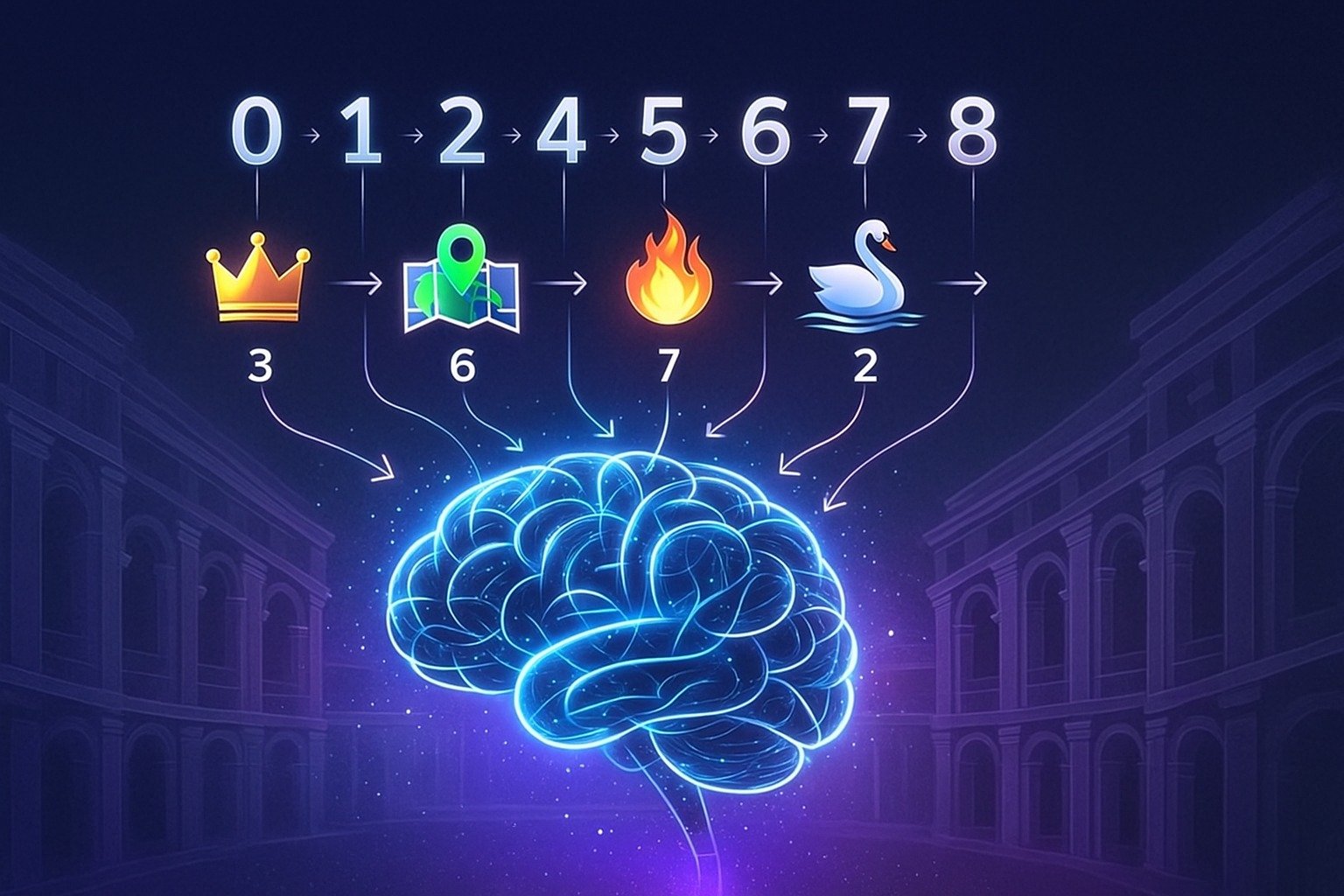
“Illustration of number memory techniques showing digits transforming into images and entering a memory palace with neon-blue neural pathways, flat-vector style.”

Ready to Train Your Brain?

Challenge your cognitive skills with our scientifically-designed brain training games. Improve memory, reaction time, and mental agility.

Reaction Time Test

Measure and improve your reflexes with precise timing challenges.

Play Now
🗣️

Verbal Memory Test

Exercise your language memory and word recall abilities.

Play Now
🧠

Chimp Memory Test

Challenge your working memory with complex pattern sequences.

Play Now
🔢

Number Memory Test

Push your digit span limits with numerical memory challenges.

Play Now

Leave a Comment