
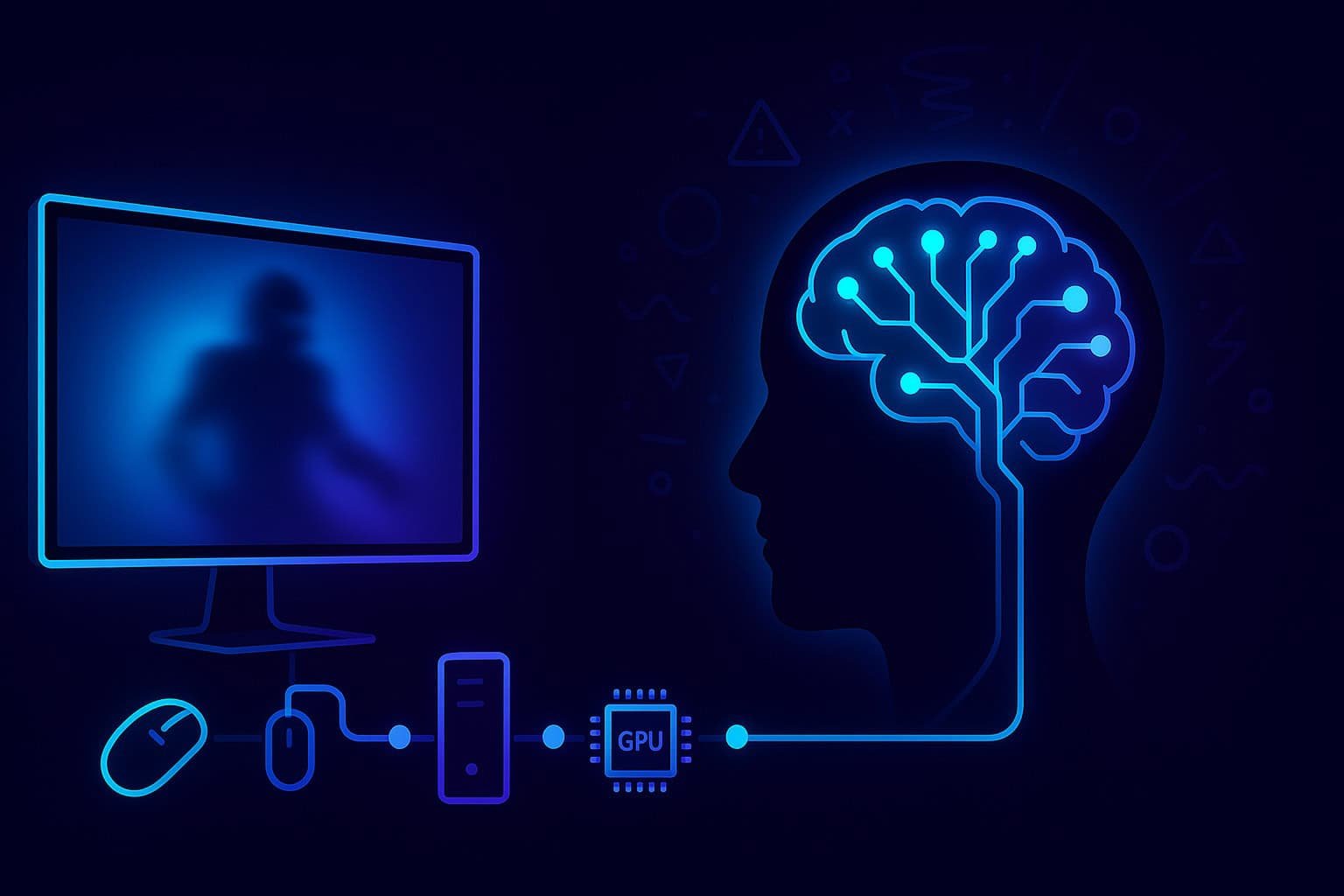
Many gamers experience moments when their reactions feel slower than usual—even if their equipment is good, their internet is stable, and they know they are capable of performing better. This sensation of being “late,” “behind,” or “one step slower” is extremely common in competitive titles. Yet the reasons behind this delayed feeling are far more complex than simply “bad reaction time.”
In reality, delayed reactions in gaming arise from a mixture of technical, cognitive, visual, and gameplay-specific factors. This guide explains the full picture behind those moments when your reactions feel delayed and provides a structured approach to improving them in a scientifically grounded, practical way.
1. The Real Reason Reaction Time Feels Delayed in Games
“Feel vs Real “Delay”—Your Brain Can Mislead You
There is an important distinction between actual reaction time and perceived reaction time. Your brain sometimes generates the feeling of being slow, even when your measured response time is normal.
This occurs because reaction time is a multi-stage process involving:
Stage
Process
Potential Delays
Visual Detection
Eyes detect enemy movement or threat
Visual clutter, poor contrast, eye fatigue
Information Processing
The brain interprets what was seen
Cognitive overload, stress, decision fatigue
Decision-Making
Choosing appropriate response
Indecision, lack of game sense, overthinking
Motor Output
Signals sent to muscles for action
Hardware latency, input lag, muscle fatigue
Key Insight: If any part of this chain is stressed, overloaded, or interrupted, your perception of speed slows down—even if your physical reaction is unchanged. This is why gamers often say: “I reacted, but nothing happened” or “I saw him, but my brain froze for a split second.”
2. Technical Causes of Delayed Reaction Time in Gaming (Hardware)
A significant portion of “slow feeling” can be traced to technical delays. These delays are measurable, accumulate in milliseconds, and directly affect what you see and feel on screen.
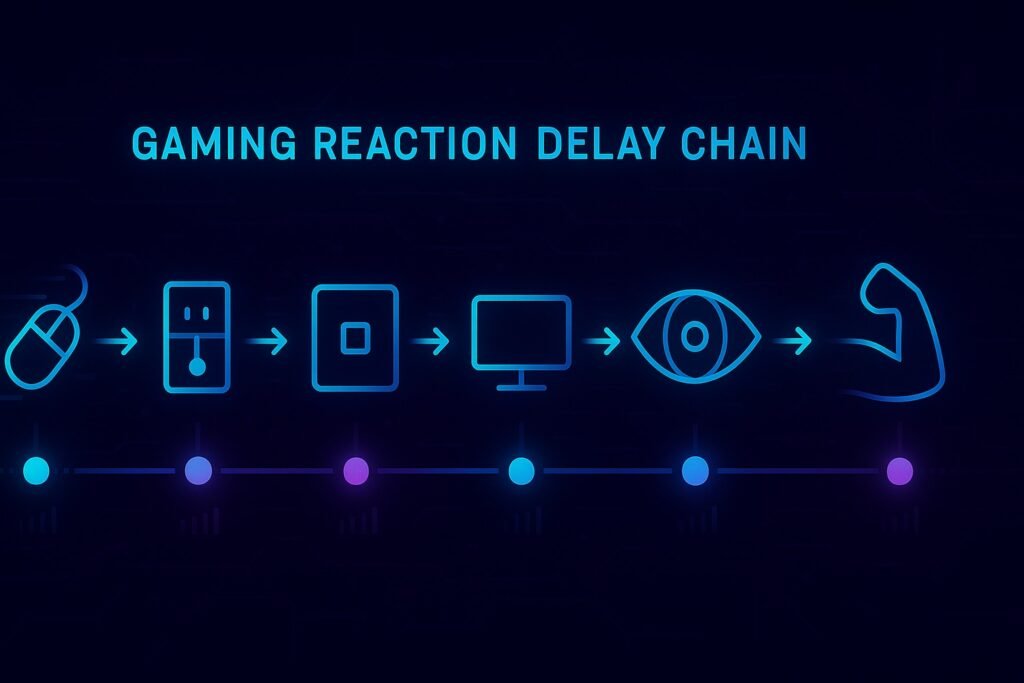
2.1 Input Lag: The Invisible Delay Chain
Input lag refers to the delay between your action and the game’s response. It includes:
Mouse or controller latency
USB polling
CPU processing
GPU rendering
Display processing
Screen refresh
Engine frame timing
Even small gaps (3–10 ms) add up. A combined delay of 40–70 ms is enough to create a clear sensation of being “slow” in fast-paced FPS titles.
2.2 Polling Rate and Peripheral Latency
If your mouse or keyboard uses a low polling rate (e.g., 125 Hz), it updates your PC only every 8 ms. At 1000 Hz,125 Hz),, updates happen every 1 ms.
Higher polling rates reduce:
Input delay
Inconsistency
Micro-stutters in aim or movement
Gamers often underestimate how much this affects responsiveness.
2.3 Refresh Rate and Frame Rate Desynchronisation
Monitor Refresh Rates:
A 60 HzA 60 Hz monitor refreshes every 16.6 ms
A 144 Hz monitor refreshes every 6.9 ms
A 240 Hz monitor refreshes every 4.1 ms
Higher refresh rates:
Show enemies sooner
Reduce blur
Provide earlier visual cues
Improve reaction window quality
The complete delay chain that causes gaming reactions to feel slow — from hardware signals to brain processing.
3. Cognitive and Brain Causes of Delayed Reaction Time
Beyond hardware, many delays originate from how your brain processes visual information in demanding environments.
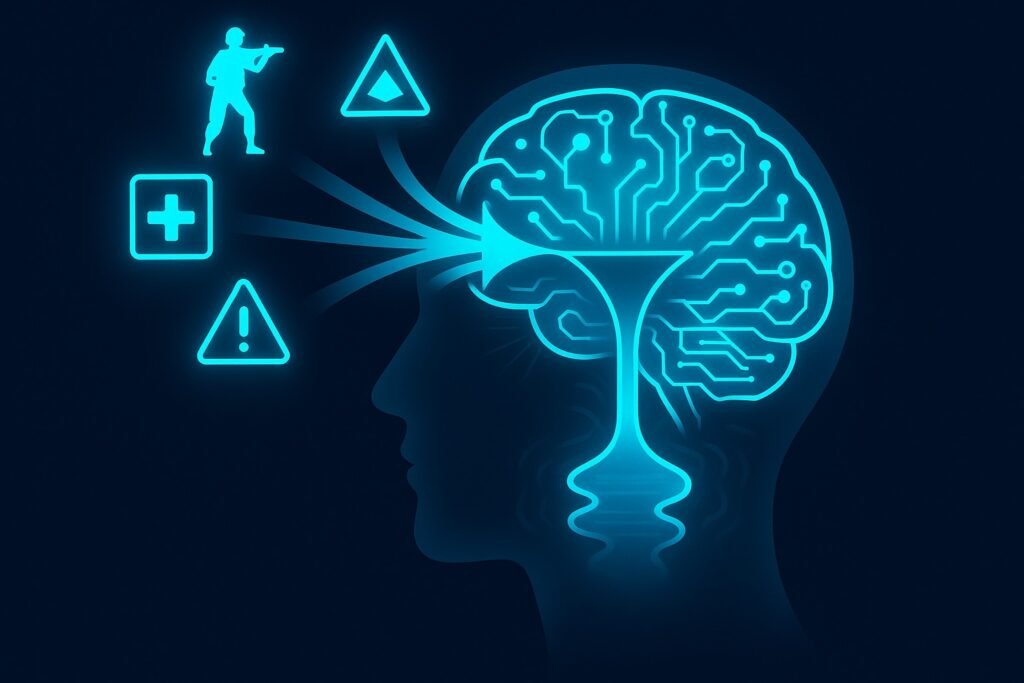
3.1 Attention Bottleneck Theory
Your brain can only process a limited number of variables at once. In a fast-paced match, you must track:
Enemy positions
Minimap information
Team status
Ability cooldowns
Movement cues
Sound cues
When the information load exceeds capacity, reaction time feels slower because the decision-making stage is delayed.
3.2 Visual Processing Overload
Games with:
Bright textures
Complex environments
Many particle effects
Cluttered UI
Force your eyes and brain to work harder. This reduces the speed at which you recognize threats.
3.3 Emotional Arousal: Anger, Stress, and Nervousness
Stress increases cognitive noise. During:
Clutch moments
Ranked matches
Long losing streaks
Your frontal cortex becomes overloaded, slowing decision speed and producing a delayed feeling.
6. Benchmark: Real vs Perceived Reaction Time
This section clarifies what typical reaction times truly are and why your perception may differ.
Skill Level
Typical Reaction Time
Common Causes of Perceived Delay
Beginner
300–350 ms
Overthinking, poor anticipation, visual overload
Intermediate
250–300 ms
Inconsistent focus, technical limitations
Experienced
200–250 ms
Minor hardware delays, occasional cognitive overload
High-Level Players
150–200 ms
Network latency, prediction errors
Professional Tier
120–160 ms
Minimal – usually technical or network related
Research Insight: Humans begin feeling lag at ~50–70 ms and begin noticing visual delay at ~15–20 ms. Therefore, even minor technical delays create large subjective impressions of being slow.
8. How to Fix Delayed Reaction Time in Gaming
Technical Fixes
Disable V-Sync
Set mouse to 1000 Hz polling
Use a high-refresh-rate monitor
Lock FPS for stable frame pacing
Reduce post-processing effects
Optimise graphics settings for clarity
Disable enhanced pointer precision
Update drivers
Close background latency-causing apps
Cognitive and Brain Fixes
Use warm-up routines to activate neural pathways
Reduce information overload by simplifying HUD elements
Practice visual scanning
Take targeted short breaks every 45–60 minutes
Use slow breathing techniques to reduce emotional stress
Build situational awareness through consistent practice
Avoid overstimulation and long binge sessions
Gameplay-Specific Fixes
Improve crosshair placement for high-probability angles
Use angle isolation during peaks.
Study enemy movement patterns
Read animation cues (walk, peek, strafe timings)
Reduce unnecessary movement that exposes ankles.
Practise common duel scenarios
Strengthen map knowledge to reduce hesitation
How cognitive overload, visual clutter, and attention limits create internal reaction delays during gaming.
Frequently Asked Questions
Why do my reactions feel slower in competitive matches than in practice?
This common experience has several scientific explanations:
Increased Cognitive Load: In real matches, you’re processing more variables simultaneously—enemy positions, team coordination, objective timing, and strategic decisions. This overloads working memory and slows decision-making.
Emotional Arousal: Competitive pressure increases cortisol and adrenaline, which can narrow focus and reduce processing efficiency. Studies show performance anxiety can increase reaction time by 15-25%.
Unpredictability: Practice scenarios are predictable; real opponents use unpredictable movement and strategies, requiring more cognitive resources to process.
Visual Complexity: Match environments have more visual clutter, particle effects, and UI elements competing for attention.
The solution involves both mental training (stress management, focus techniques) and gameplay practice (situational awareness, pattern recognition).
How much does monitor refresh rate actually affect reaction time? −
Monitor refresh rate significantly affects both actual and perceived reaction time:
60 Hz to 144 Hz: Reduces display latency by ~10 ms and provides a noticeable improvement in target tracking and visual clarity.
144 Hz to 240 Hz: Further reduces latency by ~3 ms and provides smoother motion for highly competitive players.
Beyond 240 Hz: Diminishing returns for most players, but beneficial for professional esports athletes.
The real benefit comes from the combination of higher refresh rates and stable frame rates. A 144 Hz monitor with consistent 144+ FPS provides:
Earlier visual information (you see enemies sooner)
For most competitive gamers, 144 Hz is the sweet spot for price-to-performance ratio.
Can reaction time training apps actually improve my in-game performance? −
Reaction time apps can help, but with important limitations:
What they improve:
Basic visual reaction time to simple stimuli
Hand-eye coordination for clicking tasks
Consistency in simple motor responses
Confidence in your raw reaction capabilities
What they don’t improve:
Game-specific decision-making
Target identification in complex environments
Movement prediction and anticipation
Stress management during actual gameplay
Game sense and situational awareness
The most effective approach combines specific reaction training with actual gameplay practice. Use reaction apps for 5-10 minutes as a warm-up, then spend most of your practice time in the actual game or game-specific training scenarios.
Why do I sometimes react instantly while other times feel incredibly slow? −
This inconsistency has several potential causes:
Attention Cycling: Your focus naturally waxes and wanes in 90-120 minute cycles. During low-attention phases, reaction time can slow by 20-40%.
Mental Fatigue: As you play longer sessions, decision fatigue accumulates, making your brain slower at processing visual information and choosing responses.
Variable Cognitive Load: Some game situations require processing more information than others. When multiple enemies appear simultaneously or complex abilities are used, your brain may become overloaded.
Emotional State Fluctuations: Moments of frustration, anxiety, or overexcitement can significantly impact reaction consistency.
Physical Factors: Minor changes in posture, hand position, or even hydration levels can affect performance minute-to-minute.
Predictive vs. Reactive Mode: When you correctly predict enemy actions, you react faster. When surprised, you rely on slower pure reactions.
Improving consistency involves regular breaks, maintaining physical comfort, and developing better game sense to spend more time in predictive rather than reactive mode.
Further Reading & Scientific Resources
Explore these non-competitive external resources for a deeper understanding of gaming reaction time research:
This article is for informational and educational purposes related to gaming performance. The content focuses on common experiences in gaming and general cognitive principles. If you’re experiencing significant, persistent issues with reaction time, coordination, or cognitive function in daily life (not just gaming), please consult with a healthcare professional for proper evaluation.
Explore Reaction Time Science
Understand the cognitive and neurological processes behind response speed through
research-based educational content.
⚡ How does your brain process speed?
⏱️
Reaction Time Basics
Learn about the fundamental concepts of response speed and cognitive processing time.
Educational Content Notice:
This material is designed for learning about cognitive processes through research-based exploration.
Reaction times vary naturally and are influenced by numerous factors including attention, fatigue, and individual differences.
Touheed Ali is the founder and editor of MemoryRush, an educational cognitive science platform. He builds and maintains interactive tools focused on memory, attention, and reaction time.
His work centers on translating established cognitive science concepts into clear, accessible learning experiences, with an emphasis on transparency and responsible design.
1 thought on “Why My Reaction Time Feels Delayed When Gaming | Complete Expert Guide”
Comments are closed.