
Number Memory Myths:
Quick Answer:
Number memory myths usually come from confusing digit span with chunking, mixing math skill with recall ability, and treating memory like recording instead of reconstruction. Cognitive science shows encoding quality (meaning, structure, and attention) matters more than raw “talent” or fixed digit limits.
Think you know how number memory works? Popular beliefs about “7±2 limits,” innate talent, and photographic recall don’t match what cognitive research reveals. Let’s separate fact from fiction.
What This Page Explains (And What It Doesn’t)
This page focuses on debunking myths about number memory. It does not cover:
- How to improve number memory (see: Number Memory Techniques)
- Number memory scores or benchmarks (see: Good Number Memory Score)
- Deep guidance on ADHD, anxiety, or dyscalculia
- Memory challenges or practice tests
The Number Memory Myth Map
This table summarizes common misconceptions versus what research actually shows:
| Common Myth | What Research Actually Shows | Why This Myth Spreads | Real-World Impact |
|---|---|---|---|
| “You can only remember 7±2 numbers.” | Chunking and meaning dramatically change capacity limits | Oversimplification of Miller’s 1956 paper on working memory | People don’t use effective strategies thinking they’re biologically limited |
| “Good memory means fast recall.” | Deep encoding beats speed; understanding trumps rote memorization | Confusing working memory speed with long-term memory quality | Prioritizing speed over understanding leads to fragile memory |
| “Some people are just born with number memory talent.”recall.” | Memory systems can be learned; expertise comes from practice | Attributing expert skill to innate ability rather than training | Discourages people from developing skills they believe require “talent” |
| “Repetition is the best way to remember numbers.”talent.” | Strategic encoding (meaning, structure, images) beats passive repetition | Confusing familiar school study methods with optimal cognitive science | Inefficient learning with high forgetting rates despite effort |
Top Number Memory Myths Debunked
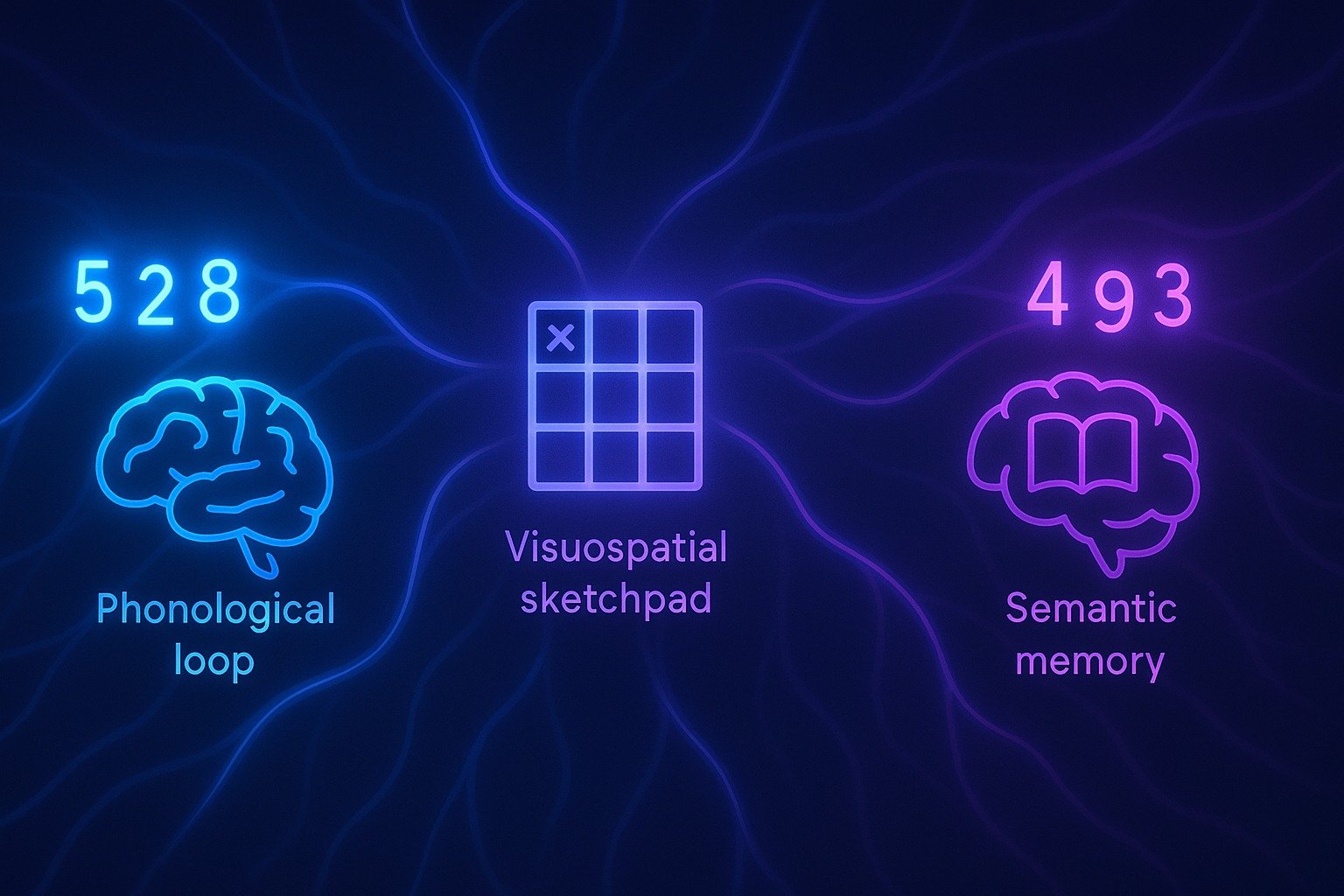
Myth: The “Magical Number Seven” is your brain’s limit
The belief that you can only hold 7±2 items comes from Miller’s famous 1956 paper, but this applies to unrelated items in working memory.
Reality: Meaning changes everything
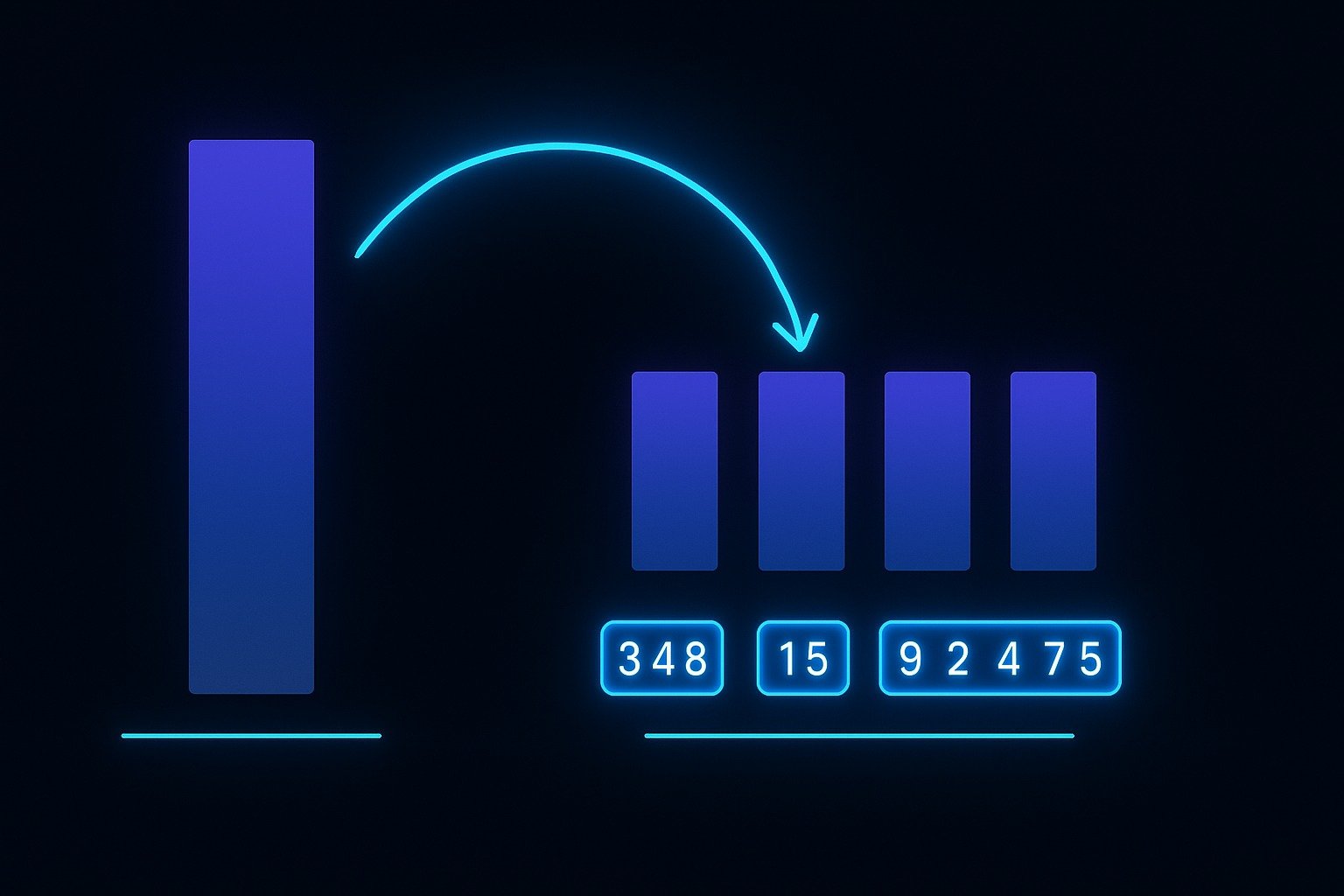
When numbers have meaning (like 1492 for Columbus or 911 for emergencies), they’re not processed as separate digits. Your brain chunks them into single units. Research in cognitive psychology shows chunking capacity is virtually unlimited with proper encoding.
Why this myth spreads:
People quote Miller’s paper without reading the full context about chunking and meaning.
For what constitutes “average” memory capacity, see: Good Number Memory Score
Myth: Being good at math means having a “good number memory.”
This confuses numerical understanding with digit recall ability. Mathematicians think in concepts and relationships, not digit strings.
Reality: Different cognitive skills
Math skill involves reasoning, pattern recognition, and conceptual understanding. Number memory is about encoding and retrieval of arbitrary sequences. Studies show minimal correlation between mathematical ability and digit span performance.
Why this myth spreads:
Cultural association between “numbers” and “math” as a single domain.
Myth: Memory champions have “photographic” or eidetic memory
The belief that memory experts have special innate abilities rather than trained skills.
Reality: Trained systems, not supernatural ability
Memory champions use systems like the method of loci (memory palace) and the Major System. These convert numbers into images and stories. Research shows these techniques are learnable, not innate.
Why this myth spreads:
The results seem miraculous if you don’t understand the systematic approach behind them.
For memory techniques and systems, see: How to Improve Number Memory
Myth: Working memory has a fixed, unchangeable capacity
The idea that your brain’s “RAM” is genetically determined and can’t improve.
Reality: Working memory is trainable within limits
While there are biological constraints, research on working memory training shows improvements in both capacity and efficiency. The key is training the process, not just repeating tasks.
Why this myth spreads:
Confusion between short-term biological limits and long-term trained capacity.
Key Distinctions That Clear Confusion
Number Memory vs. Math Ability
Remembering “3.14159” is number memory. Understanding what π represents and how to use it in calculations is math. They use different brain networks and develop through different types of practice.
Digits vs. Chunks
A 10-digit phone number (5551234567) is 10 separate items if processed digit by digit. means having a chunked number as (555) 123-4567, which is three meaningful units. The chunked version fits easily in working memory.
Continue Your Number Memory Learning
Now that you understand what number memory isn’t, explore what it actually involves:
- Start with the fundamentals of how number recall actually works. → Understand Number Memory
- Evidence-based methods to actually enhance your number recall. → Learn Techniques
- What different digit spans actually mean in practical terms. → Understand Scores
- Apply this knowledge with our interactive assessment. → Take the Test
This understanding connects to several related cognitive areas:
- How working memory differs from short-term memory
- Why numbers are harder than words for most people
- How visual approaches can help number recall
- The difference between digit span and true number memory
The MemoryRush Perspective
Understanding these myths isn’t just academic—it changes how you approach memory. Believing in fixed limits creates fixed mindsets. Understanding reality opens doors to actual improvement. Your brain isn’t broken because you forget numbers; it’s working exactly as designed. The question is whether you’re working with its design or against it.
Every myth debunked here points toward a more effective approach: chunking over counting, meaning over memorization, and digit by digit over struggle.

1 thought on “Number Memory Myths: Science, Limits & How Recall Really Works”
Comments are closed.