
Chimp Test Guide | Understand Visual Memory Assessment
What Is the Chimp Test?
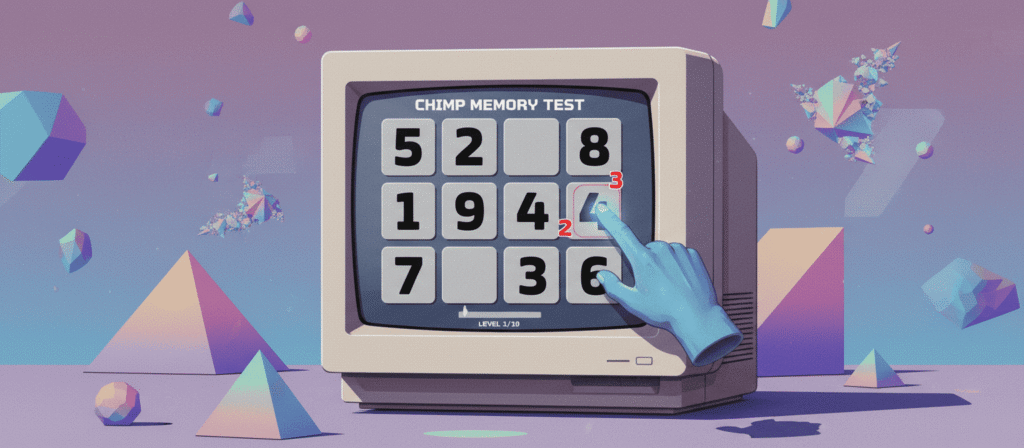
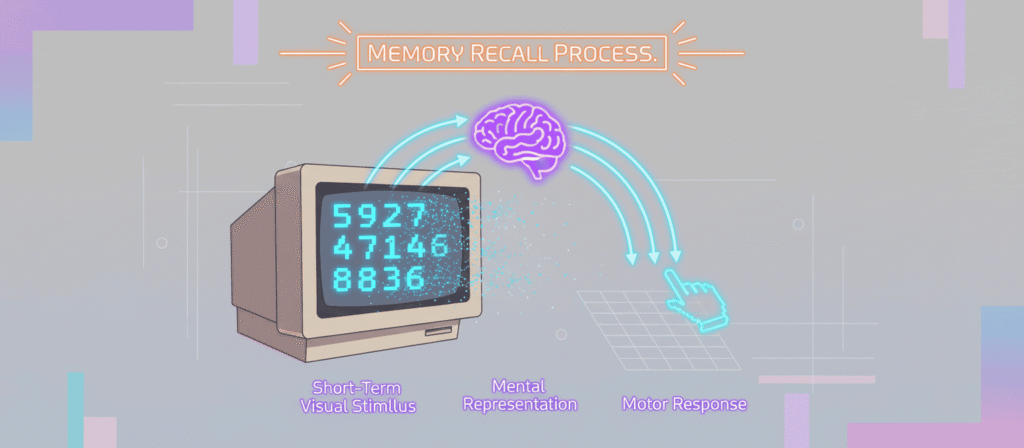
The Chimp Test is a visual memory task where you are asked to remember the positions of numbers on a screen after they briefly disappear.
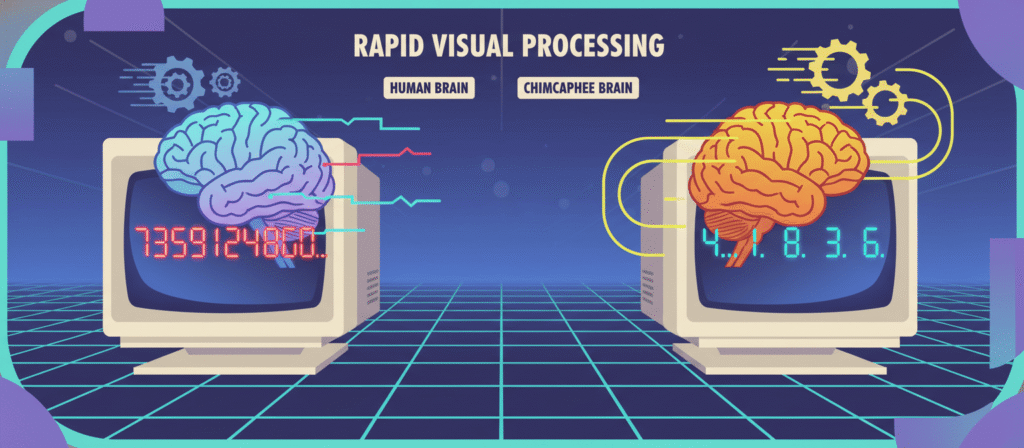
The test gained attention after studies showed that young chimpanzees could outperform adult humans on this specific task. Online versions, including the one on MemoryRush, use this format as an educational demonstration of how temporary visual information can be stored and recalled.
On MemoryRush, the Chimp Test is provided strictly for learning and exploration. It is non-diagnostic and does not assess intelligence, mental health, or overall cognitive ability.
What the Chimp Test Is Used For Demonstrate
This test is commonly used to illustrate limits of short-term visual recall under controlled conditions.
It helps users observe:
- How quickly visual information can fade
- How increasing information load affects recall
- How performance can vary between attempts
It does not evaluate:
- Intelligence
- Attention disorders
- Learning ability
- Cognitive health
Results reflect performance on this single task only.
For background on where this test comes from, see What Is the Chimp Test?
Basic How-to-Play Overview
The Chimp Test follows a simple structure:
- Numbers appear on the screen at random positions
- You select the numbers in ascending order
- After the first selection, the remaining numbers disappear
- You attempt to recall their positions
As you progress, the number of items increases, making recall more demanding.
Detailed task configurations and variations are explained on the test page itself.
How Scores Are Presented
Scores are shown as the longest correct sequence completed during a session.
There is no official benchmark, passing score, or ranking system. Scores are intended to act as personal reference points, not as indicators of ability or comparison with others.
Questions about score meaning and common misconceptions are covered separately in Benefits and common questions about the Chimp Test
Interpreting Results Responsibly
Your result should be viewed as a moment-in-time observation.
Performance can change due to:
- Fatigue
- Distractions
- Device differences
- Familiarity with the task
A higher or lower score does not define memory strength, intelligence, or potential. It reflects how you performed on this task under those specific conditions.
Why This Test Is Often Compared to Chimpanzees
Chimpanzees tend to perform well on this task because of how quickly they can encode visual layouts before information disappears.
This does not mean chimpanzees have superior memory overall. It highlights a narrow difference in rapid visual snapshot recall, not general cognition.
Further reading:
These articles explore the topic in depth and are intentionally separate from this guide.
Important Limitations
The Chimp Test has clear limits:
- It measures one narrow task
- It is not a cognitive evaluation
- It is not suitable for diagnosis or screening
- It should not be used for self-judgment or comparison
Results are educational only.
For full transparency, review our Content Disclaimer and Editorial Policy:
Who This Guide Is For
This guide is for:
- Readers who want to understand what the Chimp Test is
- Users curious about how the task works
- Educators and learners exploring memory concepts
It is not intended for clinical, medical, or professional decision-making.
Learn More (Optional Reading)
This guide intentionally avoids theory, training advice, and research breakdowns.
If you want deeper explanations, explore:
About This Guide
This guide is written and reviewed by Touheed Ali, founder and editor of MemoryRush.
MemoryRush provides educational cognitive tests and explanations for general audiences. All content is non-medical, non-diagnostic, and reviewed under published editorial standards.
Learn more: