
What Is Number Memory?
Quick Answer Box:
Number memory is the ability to encode, hold, and recall digits in the correct order for a short period. It’s often tested through digit-span tasks where sequences must be repeated accurately. This ability overlaps with working memory but specifically focuses on numeric sequences rather than general information.
Introduction
When you try to remember a phone number just long enough to dial it, or recall a verification code from your screen, you’re using your number memory. It’s one of those everyday cognitive skills we rarely think about—until it fails us.
This page provides the clear, foundational explanation that most guides skip. We’ll define what number memory actually is, how it works in your brain, what it measures, and—just as importantly—what it doesn’t include.
Role Clarifier Section
This page is the definitive definition. It covers: what number memory is, how it works cognitively, what it measures, and how it differs from related concepts.
What it is not: This is not a guide on how to memorize long numbers or improve your score. Those topics have their own dedicated pages.
Core Definition in Cognitive Terms
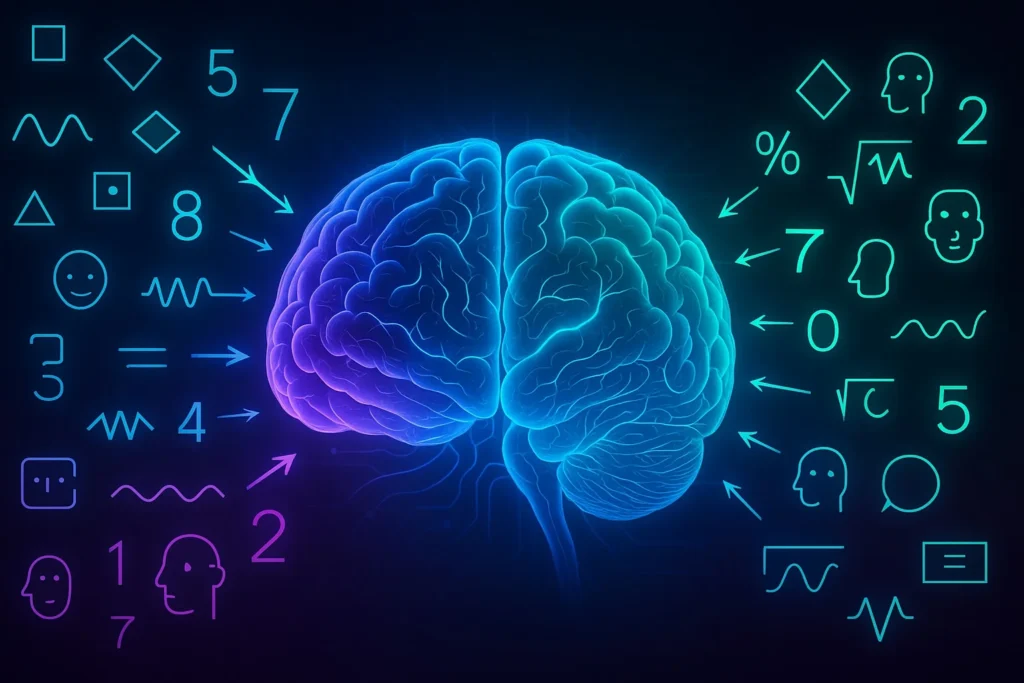
In cognitive psychology, number memory refers specifically to the capacity to:
Encode a sequence of digits (perceive and register them)
Maintain that sequence briefly in conscious awareness
Recall the digits in their original correct order
This ability sits at the intersection of several cognitive systems, primarily drawing on the phonological loop and visuospatial sketchpad components of working memory. Unlike general working memory, number memory has a narrow focus: sequences of the symbols 0-9.
How Number Memory Works: The Processing Chain
Think of number memory as a four-stage mental assembly line. Breaks can happen at any stage:
Processing Chain Table:
| Stage | What Happens | Common Error |
|---|---|---|
| 1. Encoding | Digits enter your cognitive system through vision or hearing | Missing a digit entirely |
| 2. Maintenance | The sequence is held briefly in working memory | Rapid fading (“it just disappeared”) |
| 3. Ordering | Your brain preserves the sequence structure | Swapping or reversing digits (58 becomes 85) |
| 4. Output | You reproduce the sequence verbally or in writing | Slip of the tongue or mistyping |
This model helps explain why you might remember most digits but mix up their order—that’s typically a Stage 3 (Ordering) issue.
What Number Memory Tasks Actually Measure
When you take a number memory test, it’s evaluating three specific things:
Sequence Accuracy: Can you reproduce the exact order? (This is what makes it different from remembering a set of unrelated items.)
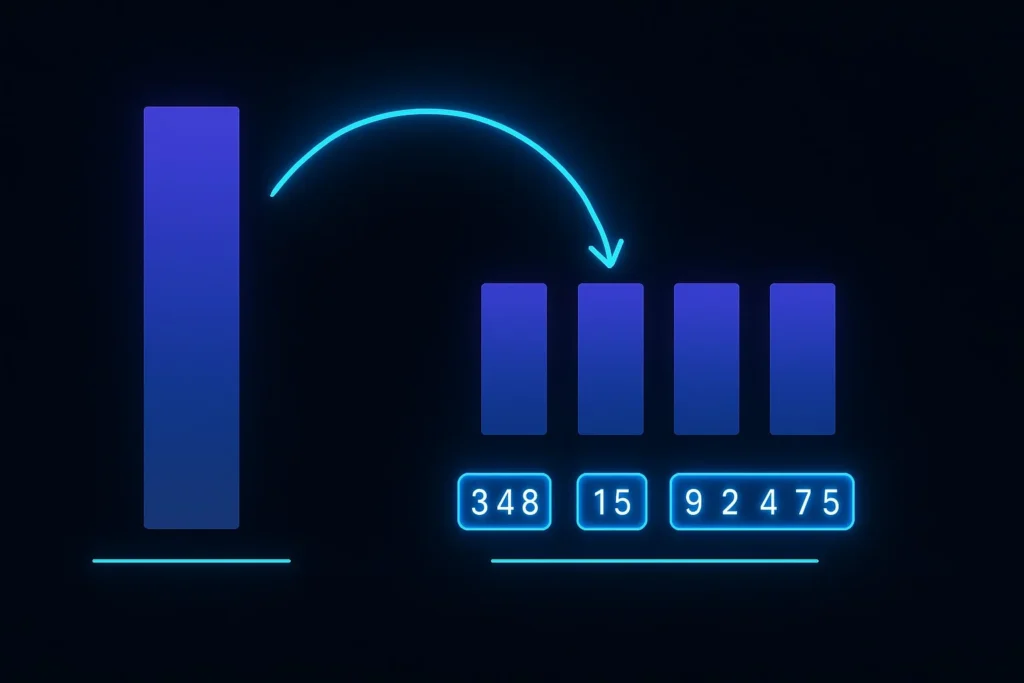
Short-Term Storage Capacity: How many digits can your system hold at once before overload?
Interference Sensitivity: How easily is the sequence disrupted by new information or distractions?
Important distinction: Number memory tests do not measure mathematical intelligence, calculation ability, or general IQ. They measure one specific cognitive function.
Number Memory vs. Related Concepts
This comparison prevents confusion with similar terms and defines our site’s content boundaries:
Comparison Table:
| Term | What It Means | Where It Overlaps | Key Difference |
|---|---|---|---|
| Number Memory | Recalling digit sequences in order | Uses working memory systems | Specific to digits + order |
| Digit Span | A common test format (forward/backward) | Measures number memory | A test method, not the ability itself |
| Working Memory | Holding & manipulating information | Number memory is a subset | Broader (includes words, tasks, concepts) |
For deeper comparisons, see our dedicated pages on digit span vs. number memory and working memory differences.
Why Digits Are Harder to Remember Than Words
Ever notice that random numbers slip away faster than a sentence? There’s a cognitive reason:
Low Semantic Meaning: The digit “7” alone doesn’t naturally evoke images or associations like the word “apple” does. This makes encoding less “sticky.”
Order Sensitivity: With words in a sentence, meaning often survives some reordering. With numbers, “582” is completely different from “528.”
Limited Distinctiveness: There are only 10 digits, so they’re easily confused with one another, unlike thousands of distinct words.
This inherent challenge is why number memory is a specialized skill worth understanding—and why techniques to improve it exist.
Everyday Examples of Number Memory
You use this ability more often than you might realize:
Recalling a phone number from your screen to your keypad
Remembering a one-time passcode (OTP) from a text message
Holding a score or statistic in mind during a game
Memorizing a short locker combination or PIN
Remembering a date or time briefly before writing it down
What This Page Does NOT Cover
To maintain definitional purity and guide you to the right information:
-
How to improve number memory → See our dedicated training guide and techniques
-
What constitutes a good score? Refer to our score interpretation guide
-
Why some people have better number memory: explained in our mechanisms analysis
-
Common myths about number memory → Debunked in our myths page
-
Visual vs. verbal number memory → Covered in our visual memory guide
Quick Definitional Answers (FAQ)
What exactly is number memory?
It’s the specific cognitive ability to temporarily store and recall sequences of the digits 0-9 in their correct order. It’s a subset of working memory with a narrow focus.
Is number memory the same as working memory?
No, it’s a part of working memory. Working memory includes holding and manipulating all types of information (words, images, tasks), while number memory focuses only on digit sequences.
Why do I often mix up digits (like 58 becoming 85)?
This is typically an “ordering” error in the processing chain. Your brain encoded and maintained the digits but struggled with preserving their exact sequence—a common challenge with low-meaning symbols.
Is number memory related to math ability?
Not directly. While both involve numbers, math requires calculation, reasoning, and conceptual understanding. Number memory is about rote sequence recall. One can be strong while the other is average.
Closing & Next Step
Now that you understand what number memory is, you might want to learn how it’s measured or how to strengthen this specific ability.
Continue your exploration with our structured guides:

Touheed Ali
Touheed Ali is the founder and editor of MemoryRush, an educational cognitive science platform. He builds and maintains interactive tools focused on memory, attention, and reaction time.
His work centers on translating established cognitive science concepts into clear, accessible learning experiences, with an emphasis on transparency and responsible design.
MemoryRush
Educational Cognitive Science Platform • Memory • Attention • Reaction Time
Educational Use Only
MemoryRush is created for learning and self-exploration and does not provide medical, psychological, or clinical evaluation.
5 thoughts on “What Is Number Memory?”
Comments are closed.