
How to Improve Reaction Time: Simple, Effective Methods

How to Improve Reaction Time 

Quick Answer:

Reaction time improves when your brain learns to detect a cue sooner, choose the correct response with less hesitation, and execute the same movement more consistently. Unlike reflexes (automatic spinal responses), reaction time is a conscious skill: stimulus → decision → action. This guide focuses only on shortening that trainable delay—without turning into a fitness or lifestyle article.

Purpose

Reaction time is the delay between a stimulus appearing and your chosen response happening.
This page is about reducing the trainable delay within that chain.
It is not a reflex article, and not a general “health optimization” guide.
If you’re mixing reflexes with reactions, start here: Reaction Time vs Reflex Time →

Reaction Time Is Not the Same as Reflex Speed

Reflexes happen automatically through a spinal “shortcut.” Reaction time doesn’t. A reaction includes three delays that you can influence:

  • Conscious processing delay: noticing the signal (often later than you think)
  • Decision bottleneck: selecting the response (especially under uncertainty)
  • Motor timing: turning the decision into a consistent movement

If you want the baseline interpretation (what counts as “good”), use the parent reference page: What is a good reaction time? →

Reaction Time Delay Model (The Processing Chain)

Stage What Happens Why It Slows
Detection A stimulus appears (visual / auditory cue) Perceptual lag, divided attention, late noticing
Decision The brain selects the correct response Hesitation, overload, too many choices
Execution Motor command triggers movement Inconsistent mechanics, variable timing

Reaction-Specific Training Methods That Work

These methods target only the reaction chain (detection → decision → execution). No endurance, no strength, no “healthy living” filler.

Stimulus-Response Drills

Goal: Make “cue → response” more automatic without becoming a reflex claim.

  • Use unpredictable cues (random timing, random side, random color).
  • Keep the response simple and repeatable (same click/tap/press).
  • Track only one metric: time-to-response consistency, not one lucky fast score.
    If you don’t know whether your test is “simple” or “choice,” anchor it here: Simple vs Choice Reaction Time →

Decision Speed Reduction

Goal: Remove hesitation when the cue appears.

  • Start with one-response rules (“if cue appears → do X”).
  • Then add two-response rules (left cue → A, right cue → B).
  • Only increase complexity when errors stop spiking—because errors usually mean the decision stage is slowing you down.
    If your reactions feel delayed specifically in competitive play, your “decision layer” is often the problem, not raw speed: Why my reaction time feels delayed when gaming →

Response Execution Training

Goal: Reduce variability in the final movement.

  • Repeat the same movement (same finger, same distance, same posture).
  • Train for stable timing first; raw speed comes second.
  • If your “fast days vs slow days” are extreme, your execution stage is unstable.
    If you suspect your baseline is being dragged down by something identifiable, use the diagnostic article: Why is my reaction time slow? →
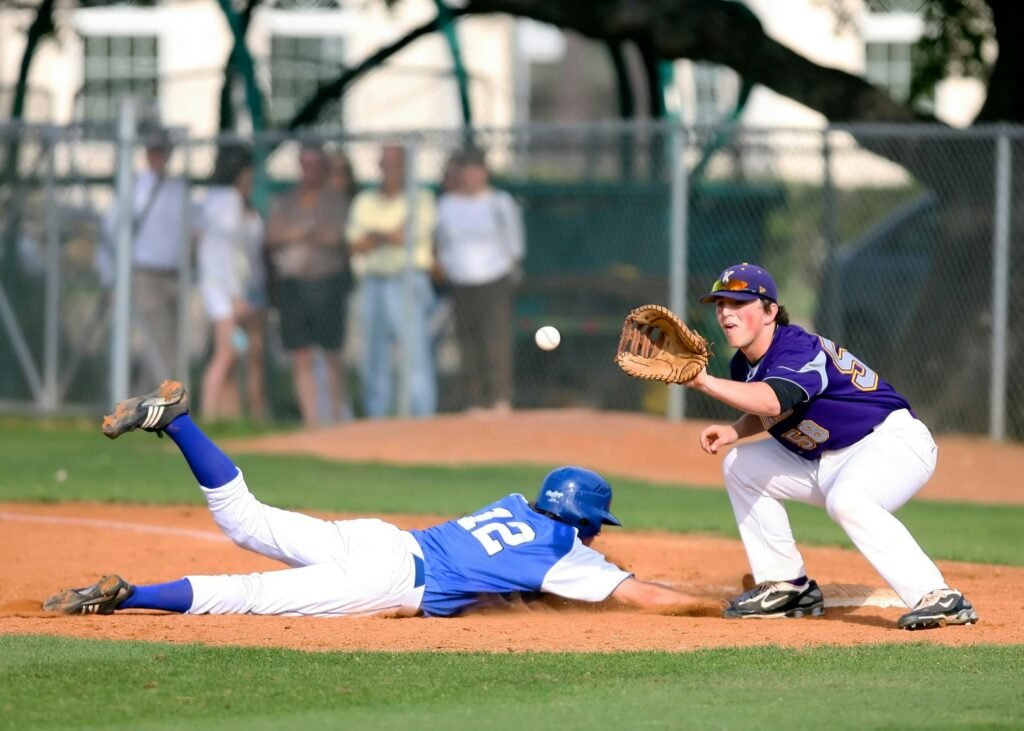
A thrilling moment in a baseball game as a runner slides into base while the fielder prepares to catch the ball.
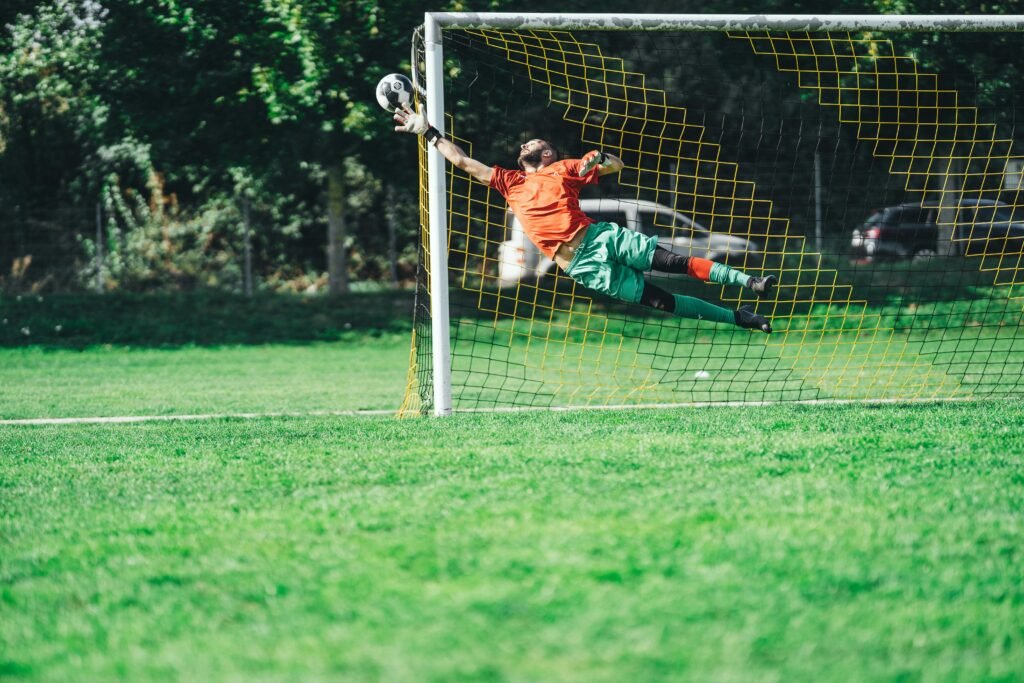
Goalkeeper leaping to save a soccer ball during an outdoor match.

Why Your Reaction Time Is Not Improving

Use this decision tree to locate the bottleneck (most guides don’t do this, which is why readers bounce).

  • Do you notice the stimulus late?
    Perceptual delay → Train detection with clearer, random cues (remove distractions inside the task, not the lifestyle).
  • Do you see it but hesitate?
    Decision delay → Reduce options (then scale from one-choice to multi-choice).
  • Do you respond inconsistently?
    Execution delay → Repeat the same movement until timing variance shrinks.

If your inconsistency happens during multitasking, that’s a different mechanism—don’t mix intents in this article: Does multitasking ruin reaction time? →

What This Guide Does NOT Address

Where Reaction Time Training Applies

Reaction time training matters most when you must respond to an unpredictable cue under time pressure:

  • Gaming: Reacting to sudden visual prompts and avoiding hesitation loops
  • Sports: Start cues, interceptions, quick directional decisions → Reaction Time in Sports →
  • Timed tasks: Rapid response to signals in training tests

FAQs

  • Can reaction time be trained?
    Yes—because it includes trainable detection, decision, and execution delays (unlike reflexes).
  • How long does improvement take?
    Most people notice measurable change after repeated exposure to the same cue-response pattern, once timing becomes more consistent—not just occasionally fast.
  • Is reaction time genetic?
    Baseline varies across people, but training can still reduce decision delay and execution variability.
  • Why does reaction time fluctuate?
    Because attention and decision load change across sessions; fluctuation usually means your bottleneck stage isn’t stable yet.

Next Step

Once you’ve separated detection vs. decision vs. execution, the next logical move is measurement.
Try the

Author Bio - MemoryRush
Touheed Ali
🧠

Touheed Ali

Founder and Editor

Touheed Ali is the founder and editor of MemoryRush, an educational cognitive science platform. He builds and maintains interactive tools focused on memory, attention, and reaction time.

His work centers on translating established cognitive science concepts into clear, accessible learning experiences, with an emphasis on transparency and responsible design.

MemoryRush

Educational Cognitive Science Platform • Memory • Attention • Reaction Time

⚠️
Educational Use Only

MemoryRush is created for learning and self-exploration and does not provide medical, psychological, or clinical evaluation.

2 thoughts on “How to Improve Reaction Time: Simple, Effective Methods”

Comments are closed.