
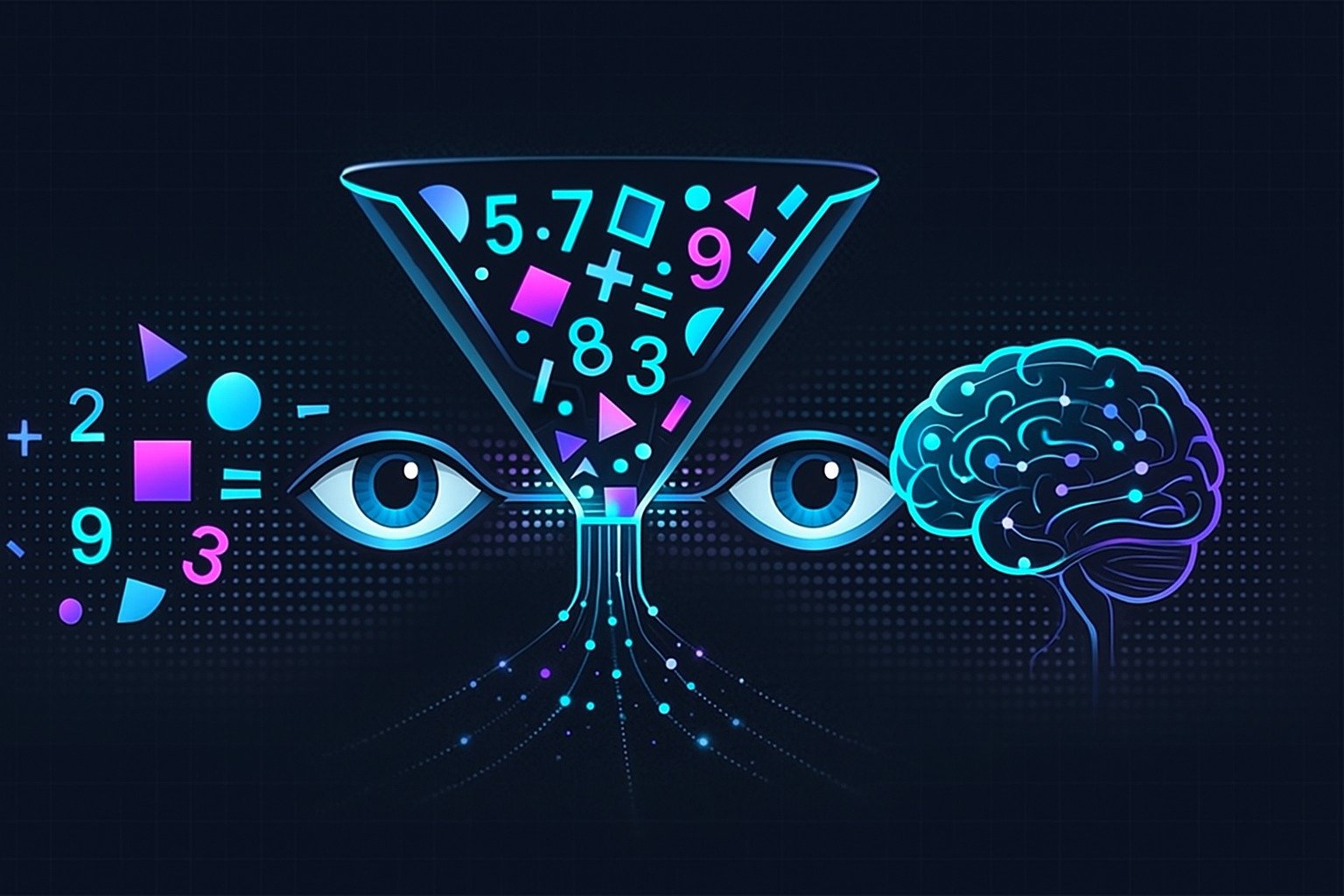
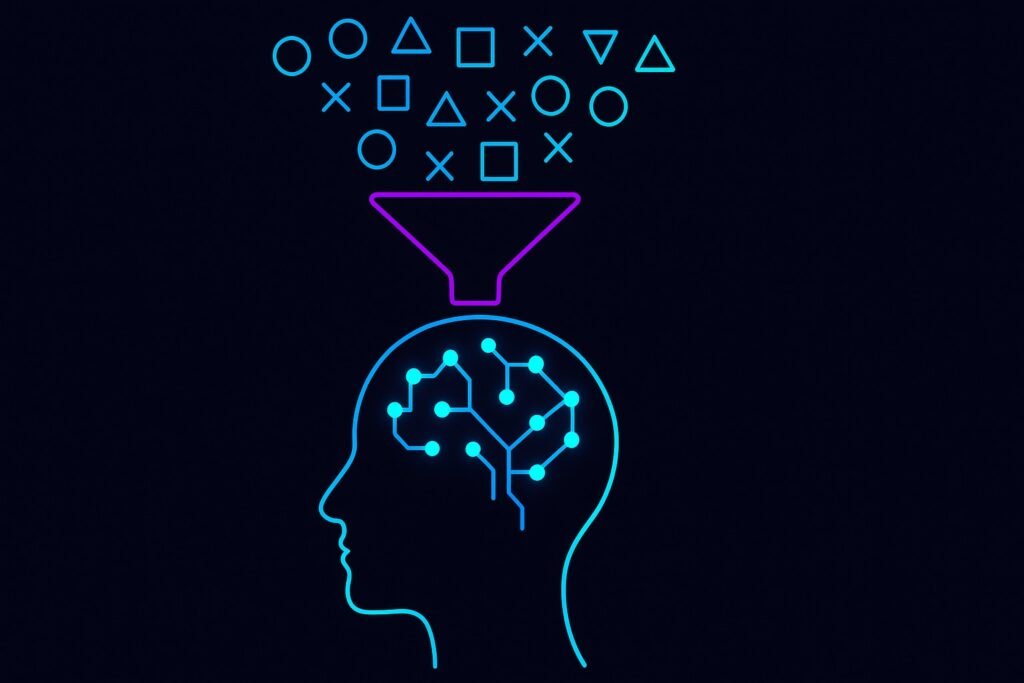

9. How to Fix Pattern Blindness
Pattern Warm-Up Training
Before pattern-heavy tasks, do 2–3 quick pattern exercises to prime your visual cortex and activate working memory loops.
Effect: Reduces pattern latency by 30-50%
Micro-Pattern Focus Drills
Train attention to details using tile puzzles, grid differences, and sequence tracking exercises.
Effect: Fixes micro-pattern blindness
Macro-Pattern Recognition Drills
Practice symmetry puzzles, shape progressions, and spatial sequences to see the big picture.
Effect: Fixes macro-pattern blindness
Noise Filtering Training
Practice with progressively more cluttered puzzles to strengthen your brain’s pattern-noise filter.
Effect: Improves signal detection in noisy environments
Frequently Asked Questions
Why do I miss obvious patterns that others see immediately? −
This common experience has several cognitive explanations:
- Attention Allocation Differences: Your brain might be focusing on different aspects of the stimulus. While someone else’s attention is drawn to the pattern structure, yours might be focused on individual elements, colors, or positions.
- Processing Speed Variations: Neural synchronization speed varies between individuals and even within the same person at different times of day or under different stress levels.
- Working Memory Load: If your working memory is already occupied (by stress, multitasking, or fatigue), there’s less capacity available for pattern integration.
- Predictive Model Differences: Your brain might be using a different predictive model that doesn’t match the actual pattern structure.
- Visual Scanning Patterns: Research shows people have different natural scanning patterns when looking at visual information, which affects what they notice first.
The key insight is that pattern detection isn’t just about “seeing”—it”‘s about how your brain organizes what it sees.
Is pattern blindness related to intelligence or cognitive ability? −
Pattern blindness is not directly related to general intelligence. Research in cognitive psychology shows:
- High-IQ individuals often experience pattern blindness because they look for complex patterns and miss simple ones.
- Pattern recognition is a specific cognitive skill that can be high or low regardless of general intelligence.
- Many intelligent people experience “complexity blindness”—failing to see simple patterns because they’re looking for complexity.
- Factors like attention control, working memory capacity, and visual processing speed are more predictive of pattern detection than IQ scores.
In fact, some studies suggest that moderate pattern blindness might correlate with creativity, as the brain is less constrained by obvious patterns and more open to novel connections.
Can pattern blindness be completely overcome with training? −
While you can dramatically improve pattern recognition, complete elimination of pattern blindness is unlikely because:
- Cognitive Limitations Are Natural: The brain has inherent processing limits. Under sufficient cognitive load, anyone will experience some degree of pattern blindness.
- Situational Factors Matter: Fatigue, stress, distraction, and multitasking will always affect pattern detection.
- Trade-offs Exist: Improving pattern detection in one domain might reduce it in another due to cognitive resource allocation.
However, you can achieve:
- 50-70% improvement in pattern detection speed with consistent training
- Reduced frequency of pattern blindness in everyday situations
- Faster recovery when pattern blindness occurs
- Better awareness of when you’re likely to miss patterns
The goal isn’t perfection but optimization for your specific needs (gaming, work, learning, etc.).
Why do I sometimes see patterns that aren’t actually there? −
Seeing non-existent patterns (apophenia) is the flip side of pattern blindness and has similar causes:
- Predictive Overdrive: Your brain is so primed to find patterns that it creates them from random noise.
- Confirmation Bias: Once you suspect a pattern exists, you interpret ambiguous information as confirming it.
- Low Signal-to-Noise Environments: In visually noisy situations, the brain often “connects the dots” even when the dots aren’t meaningfully connected.
- Emotional Arousal: High-stress or high-excitement states increase pattern-seeking behavior, including false positives.
- Fatigue Effects: Tired brains are more likely to make pattern recognition errors in both directions—missing real patterns and seeing false ones.
This phenomenon is particularly common in gambling, trading, and competitive gaming, where patterns feel crucial but may be statistically random.
Scientific Resources on Pattern Recognition & Cognitive Processing
Explore these non-competitive, authoritative resources for deeper understanding:
- NIH: Neural Mechanisms of Pattern Recognition—Research on how the brain processes visual patterns
- Sage Journals: Cognitive Load & Pattern Detection—Study on how mental load affects pattern recognition
- Frontiers in Human Neuroscience: Predictive Coding—Research on the brain’s prediction systems and pattern processing
Final Thought: Pattern Blindness as Cognitive Adaptation
Pattern blindness isn’t a bug in human cognition—it’s a feature. Your brain evolved to prioritize survival-relevant patterns (predator shapes, food sources, and social cues) over all others. In modern environments filled with artificial patterns (games, puzzles, digital interfaces), this evolutionary tuning sometimes misfires.
The good news? The human brain is remarkably plastic. With targeted training, awareness of your cognitive state, and strategic rest, you can recalibrate your pattern detection system for the tasks that matter most to you.
Pattern mastery begins not with seeing more, but with understanding why you sometimes see less.
 Important Disclaimer
 Important Disclaimer
This article discusses pattern blindness as a normal cognitive phenomenon related to attention, memory, and processing limitations. It is not intended to diagnose, treat, or address any medical or psychological conditions.
If you’re experiencing significant, persistent difficulties with pattern recognition, visual processing, or cognitive function that interfere with daily life, please consult with a qualified healthcare professional for proper evaluation and guidance.
The pattern blindness discussed here refers to common, situational cognitive limitations, not medical disorders or neurological conditions.
