

What Is Pattern Memory?
Quick Answer
Pattern memory is the ability to recognize, learn, and recall repeating sequences or visual structures. It includes pattern recognition memory, visual pattern memory, and memory for sequences. Research shows that people process familiar patterns faster, which is why MemoryRush users often improve within a few rounds once they understand how the sequence behaves.
How Pattern Memory Works
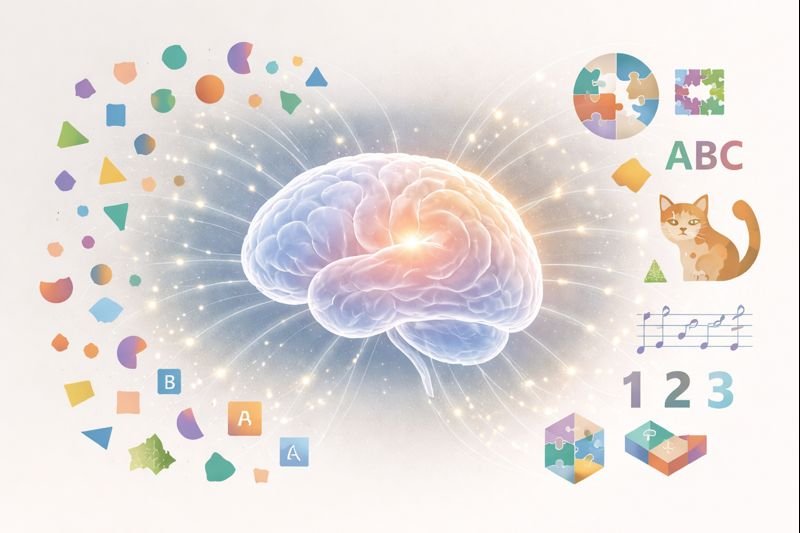
Pattern memory works by grouping individual elements into a connected form. Instead of storing several pieces separately, your brain reduces them into a single meaningful structure. This approach is often called “chunking,” and many MemoryRush players use it without realizing it. When presented with a sequence of tiles or shapes, users who chunk the pattern typically show faster reaction and better recall. This happens because the brain prioritizes relationships between objects, making sequence memory skills more efficient.
Pattern Memory in Psychology
In psychology, pattern memory combines pattern detection ability, pattern sequence memory, and pattern-based recall. The brain compares incoming information to previously stored models, which helps you interpret new data quickly. When two sequences share similar structures, the brain sometimes confuses them—a common pattern recall error observed in memory research. This explains why remembering visual sequences becomes easier with familiarity but may remain challenging when patterns overlap or look similar.
Why Pattern Memory Improves Learning
Pattern learning simplifies mentally demanding tasks by reducing the amount of information your brain must store. Instead of analyzing each element individually, the brain uses pattern processing to understand the structure. That’s why repetition helps so much—your brain strengthens its internal model and anticipates what comes next. MemoryRush players often notice they respond faster once they identify how a game organizes visual sequences. This automatic improvement shows how quickly pattern memorization adapts with consistent exposure.
Pattern Recognition vs. Pattern Recall
Pattern recognition memory allows you to notice the structure, while pattern recall skills determine whether you can reproduce it later. Recognition comes first—you identify what the pattern looks like. Recall follows—you recreate it from memory. Many MemoryRush sequence games rely on this two-step process. Users with strong recognition skills often complete early rounds easily, but deeper rounds require stronger recall skills to handle longer and more complex sequences.
How Sequence Memory Supports Pattern Learning
Sequence memory skills help your brain follow information that appears in a specific order. You use this ability when remembering visual pattern memory tasks, tapping sequences, or step-based instructions. People with strong memory for sequences often excel in pattern repetition tasks because they naturally remember the flow. When this ability combines with pattern identification abilities, pattern learning becomes smooth and intuitive. MemoryRush data shows users often start recalling longer sequences after only a few practice rounds.
Practical Examples of Pattern Memory
Everyday examples of pattern memory include recalling number clusters, identifying repeated tile layouts, memorizing dance steps, or predicting keyboard shortcuts. Pattern recall examples also appear in activities like recognizing road signs or navigating familiar routes. This skill blends pattern repetition memory and pattern-based recall to help you predict what comes next. Many players find that once the structure “clicks,” they perform confidently—even when sequences get longer or more complex.
Why Pattern Memory Matters in Everyday Life
Pattern memory influences many daily tasks, including reading, decision-making, and navigation. When you understand a familiar structure—such as a keypad layout or visual arrangement—your brain uses it to simplify actions. Cooking steps, workout routines, and even conversation cues follow predictable patterns. People with stronger pattern learning skills often pick up new tasks faster because they connect new information to existing mental frameworks. This makes everyday life feel more manageable and intuitive.
Pattern Memory vs. Working Memory
Pattern memory and working memory support each other but serve different roles. Working memory holds short-term information, allowing you to manage details moment by moment. Pattern memory relies on structure, enabling you to recognize the shape of information rather than storing each item individually. MemoryRush players often see this difference during complex rounds—working memory helps them keep track of the current sequence, while pattern memory helps them recall the overall structure. When both systems engage together, response time and accuracy increase noticeably.
FAQs
What is pattern memory used for?
Pattern memory supports tasks that rely on recognizing structure, such as solving puzzles, recalling PIN patterns, or following visual sequences. It improves efficiency because your brain focuses on relationships instead of single pieces.
How is pattern recognition different from pattern recall?
Pattern recognition helps you identify a structure quickly, while recall allows you to reproduce it later. MemoryRush games often highlight this difference as rounds progress in difficulty.
How can I strengthen my pattern sequence memory?
Short, repeated sessions help a lot. Start with small patterns and increase complexity gradually. Removing distractions improves consistency and helps your brain form stable internal sequences.
Why do I forget patterns even when I’ve understood them?
Patterns that share similar shapes can interfere with one another. Slowing down during the first viewing usually improves pattern-based recall and reduces confusion later.
Are visual pattern memory skills trainable?
Yes. Repeated exposure to structured sequences improves visual pattern memory. Brain-training games are especially effective because they offer controlled repetition and gradual difficulty.
What affects pattern identification abilities?
Attention, familiarity, fatigue, and visual complexity all influence how quickly you detect patterns. Consistent practice strengthens identification pathways.
Conclusion
Pattern memory enables your brain to make sense of sequences by connecting elements into meaningful structures. As you develop stronger pattern learning skills, tasks become easier and recall becomes more consistent. Regular practice—even a few minutes at a time—helps sharpen pattern detection, improve memory for sequences, and create steady progress in both daily tasks and MemoryRush gameplay.
Master Your Pattern Recognition Skills
Apply the neuroscience of pattern ranking with our specialized tools and guides. Test your abilities, understand the science, and improve your cognitive performance.
Interactive Pattern Test
Challenge your brain's pattern ranking system in real-time with scientifically designed memory tests.
Take the TestComplete Pattern Guide
Understand pattern memory fundamentals and how it differs from visual memory processing.
Read GuideTraining & Improvement
Practical strategies to enhance your pattern recognition speed, accuracy, and overall ability.
Train NowDive deeper into pattern recognition science with our comprehensive resource library:
 National Library of Medicine
Touheed Ali
Touheed Ali is the founder and editor of MemoryRush, an educational cognitive science platform. He builds and maintains interactive tools focused on memory, attention, and reaction time.
His work centers on translating established cognitive science concepts into clear, accessible learning experiences, with an emphasis on transparency and responsible design.
MemoryRush
Educational Cognitive Science Platform • Memory • Attention • Reaction Time
Educational Use Only
MemoryRush is created for learning and self-exploration and does not provide medical, psychological, or clinical evaluation.
7 thoughts on “What Is Pattern Memory? Definition, Steps & Examples”
Comments are closed.