
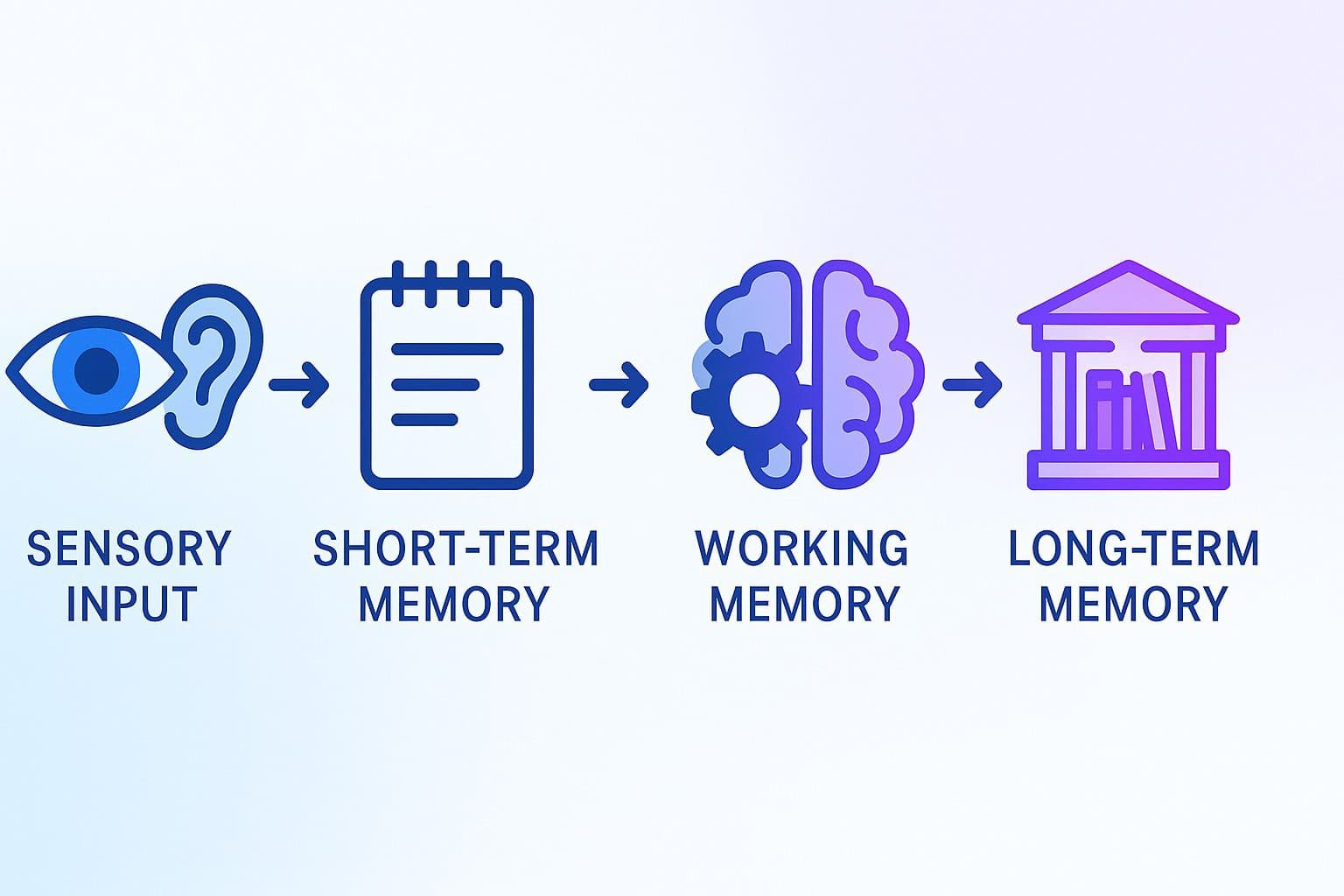
Short-term memory is a brief holding space for small amounts of information, usually for seconds. Working memory is an active system that holds information while also manipulating it to support tasks like reasoning, comprehension, and problem-solving. In practice, working memory uses short-term storage as part of its workspace.
• How to improve working memory or short-term memory
• Tests, scores, digit span norms, or “capacity benchmarks”
• The full neuroscience of memory systems
• ADHD-specific guidance
Storage vs Active Workspace: The Core Difference
Let me explain this in simple terms. Think of your short-term memory like a temporary sticky note. It’s great for holding a phone number just long enough to dial it or remembering what someone said a moment ago. But it’s passive – it just holds information briefly before it fades away.
Now, working memory is different. It’s like your mental workspace where you actually do things with information. When you’re calculating a restaurant tip in your head, following cooking instructions, or trying to understand a complex sentence, you’re using working memory. It doesn’t just hold information – it juggles it, rearranges it, and connects it with what you already know.
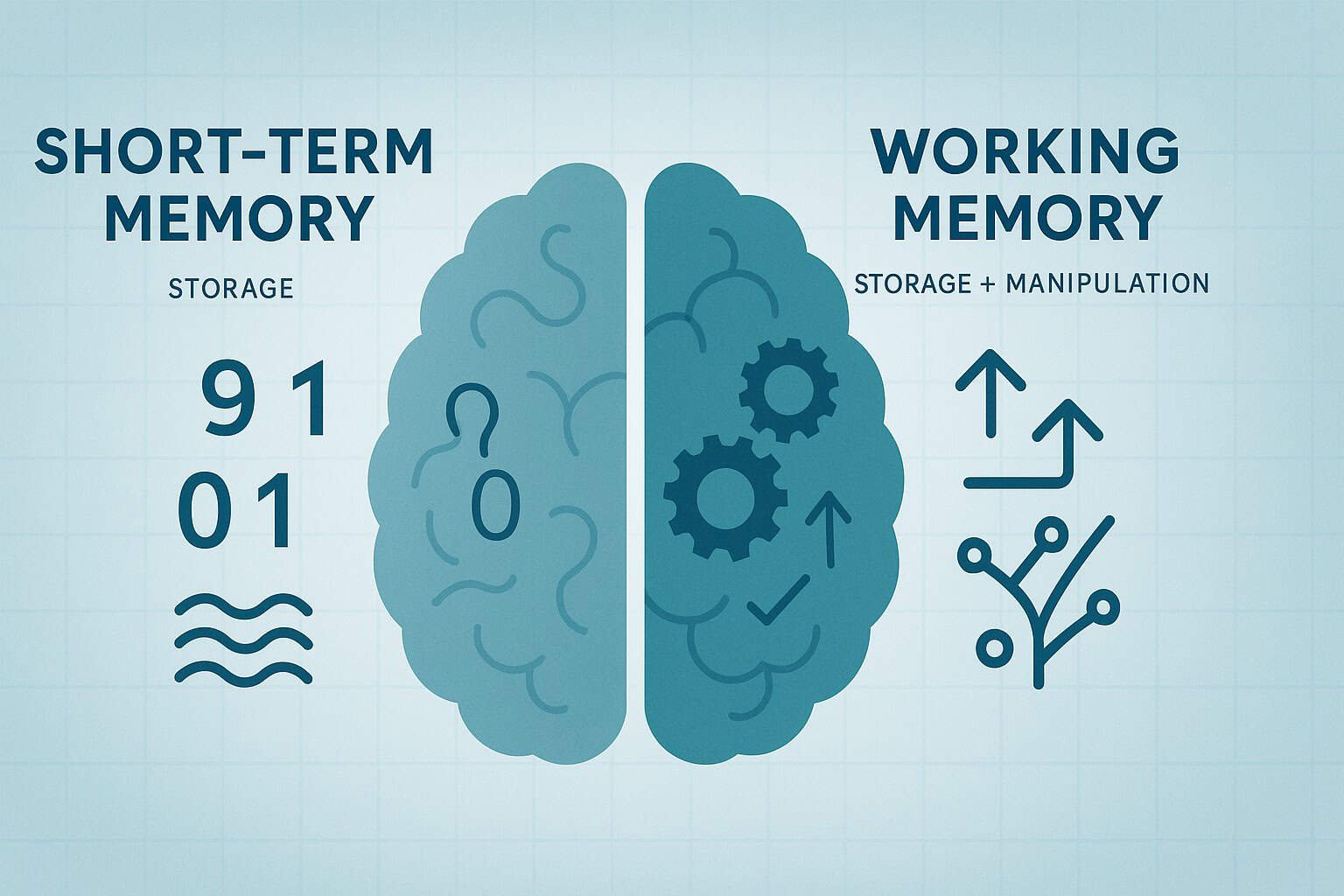
Here’s how it works in daily life. When you repeat a phone number to yourself, that’s short-term memory doing its job. But when you’re doing mental math with that number—say, adding 15% to a bill—that’s working memory taking over.
I’ve noticed many people confuse these two because they feel similar. The key difference is whether you’re just holding information or actually doing something with it. Short-term memory is your mental notepad; working memory is your entire desk with calculator, reference books, and your thinking process all happening at once.
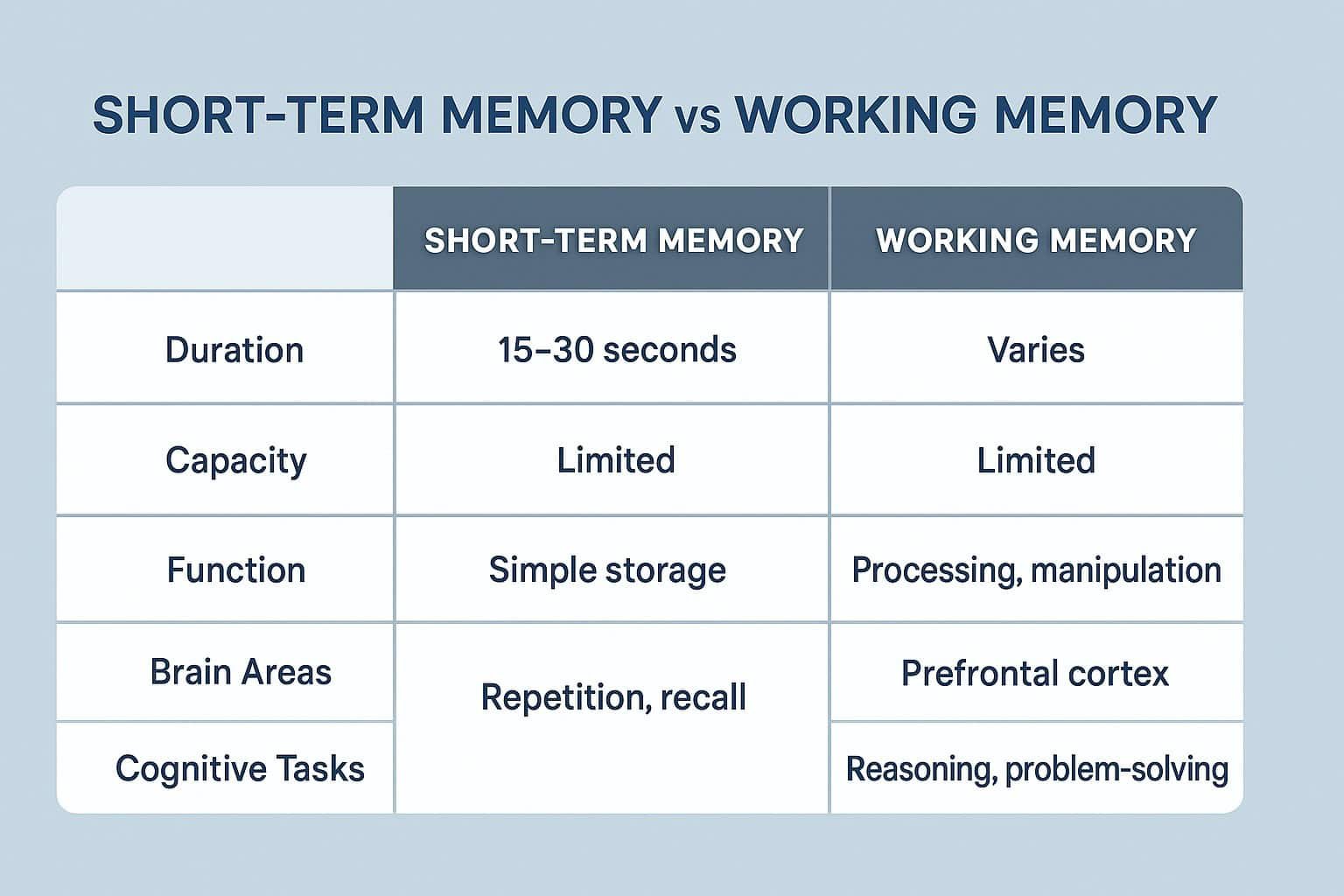
This table breaks down the key differences clearly:
| Aspect | Short-Term Memory | Working Memory |
|---|---|---|
| Main Job | Temporary storage of information | Active manipulation and processing of information |
| What It Does | Passive holding | Active mental work: updating, reordering, focusing |
| Real Example | Remembering a name you just heard | Following multi-step directions while cooking |
| When It Fails | You forget the information completely | You lose track mid-task or make processing errors |
| How They Relate | Acts as one component within working memory | Includes short-term storage as part of its system |
The Brain Science Behind the Difference
From a neuroscience perspective, these two systems light up different parts of your brain. Working memory heavily involves your prefrontal cortex—that’s the area behind your forehead responsible for decision-making and focus. This makes sense since working memory is all about active control.
Short-term storage, on the other hand, is more distributed across sensory areas of your brain. It’s like different parts of your brain temporarily holding onto specific types of information—sounds in auditory areas, images in visual areas.
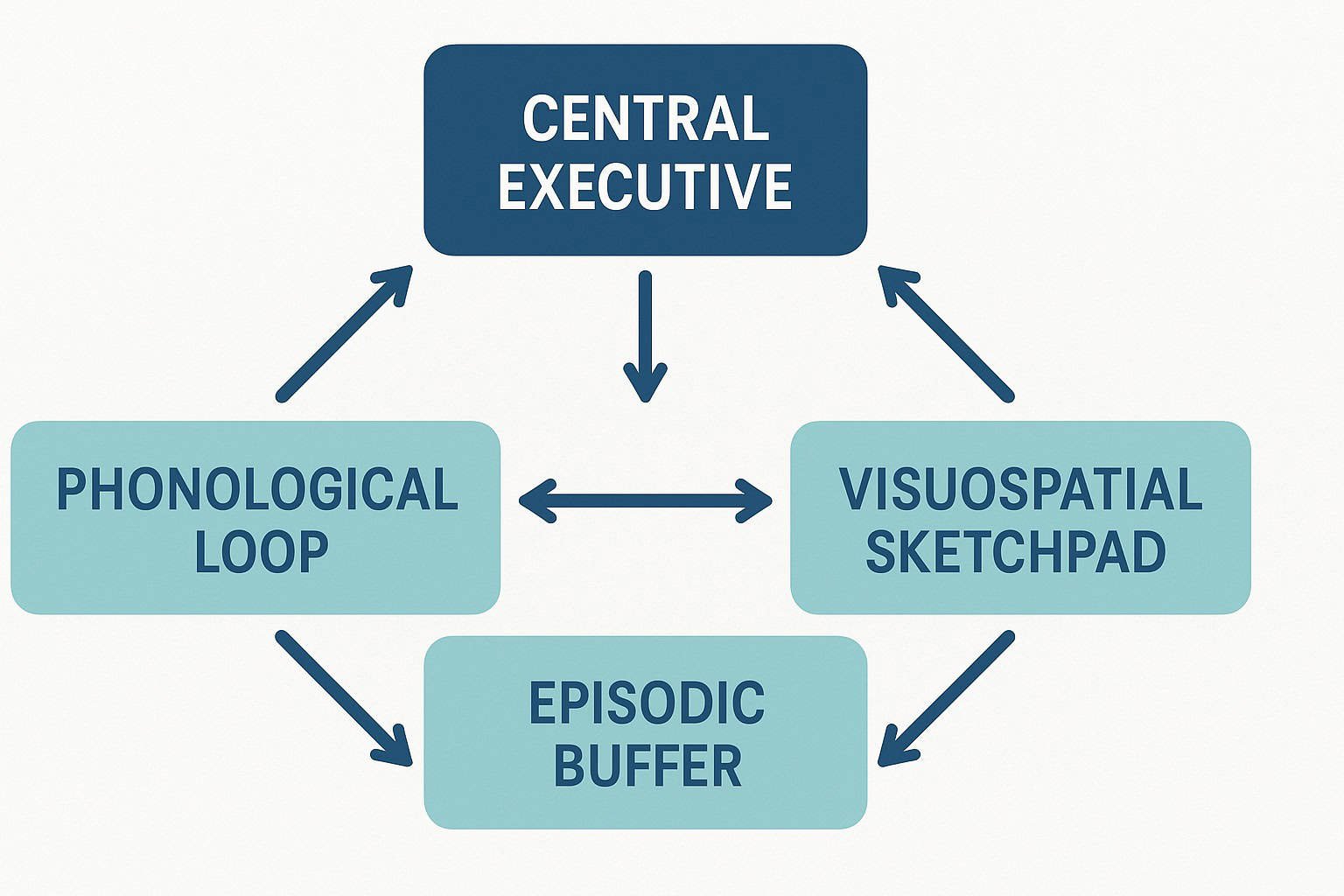
What’s fascinating is how they work together. Your working memory acts like a conductor, deciding which pieces of temporarily stored information to bring forward and work with. This coordination happens constantly throughout your day without you even noticing.
Why This Distinction Matters
Understanding this difference isn’t just academic—it helps explain everyday experiences. When you struggle to follow a conversation in a noisy room, that’s often a working memory challenge (filtering out noise while processing speech). When you forget why you walked into a room, that’s typically a short-term memory issue (the information didn’t stick).
This clarity also helps explain why some people can have excellent recall for simple information but struggle with complex tasks that require juggling multiple pieces of information at once. They might have strong short-term storage but less efficient working memory processing.
Dive Deeper Into Memory Concepts
- Learn about how ADHD affects working memory limits and active processing
- Discover echoic memory—the auditory form of short-term retention
- Explore eidetic memory and exceptional visual recall
- Understand why we forget words and verbal retrieval challenges
Put Theory Into Practice
Ready to test your active processing skills? Our games give you real-time feedback on how these memory systems work:

5 thoughts on “Working Memory vs Short-Term Memory: Differences, Models & Examples”
Comments are closed.